 EN
EN




 English
 русский
 日本語
日本語 Español
Helical Tooth Transmission Gearbox Planetary Reducer AHL Series for Servo Motor
Cat:Planetary Reducer
Planetary reducers have been widely used in many industries for their performance. Their uniquely de...
See DetailsAn indexing table on a battery-assembly line runs 45 cycles per minute, 16 hours a day, six days a week. That is more than 43,000 directional reversals per shift and well over 10 million reversals a year. When a design engineer asks how harmonic reducer performance compares to planetary gearbox performance in high-cycle industrial automation, the real test frame is precision retention, heat rise, and fatigue life under millions of transient events, not catalog torque at nameplate speed. This guide evaluates both architectures against that duty profile.
Content
A reducer is running in high-cycle duty when starts, stops, and reversals consume more of the operating cycle than steady rotation does. In practical terms, that means 30 or more indexing or pick-and-place cycles per minute, with torque transients at every acceleration and deceleration event.
Both harmonic reducers and planetary gearboxes can hit the required torque and ratio. Their performance separates in how each survives millions of transient events: traveling through backlash, exciting resonance on each reversal, and accumulating heat inside a sealed housing.
High-cycle industrial automation: operation in which an axis accumulates more than 10,000 duty cycles per year, where each cycle contains at least one acceleration peak, one stop, and typically one reversal of direction, at rates of 30 to 60 cycles per minute.
A harmonic reducer delivers lower initial backlash, typically 1 arcmin or better, while a precision planetary gearbox starts at 1 to 3 arcmin and keeps that figure far longer under reversing load. In high-cycle service, retention matters more than the delivery number.
The harmonic, or flexible gear, reducer achieves near-zero backlash through elastic deformation of the flexspline, a thin-walled steel cup flexed twice per input revolution by an elliptical wave generator. Every input revolution imposes one fatigue cycle on the flexspline cup, making flexspline fatigue life the accuracy clock of the unit. The BSHF series flexible gear reducer is built around flexspline precision and rigidity for this class of application.
| Specification | Harmonic reducer | Planetary gearbox |
| Initial backlash | 0.5-1 arcmin typical | 3-10 arcmin standard; 1-3 arcmin precision ground |
| Ratio per stage | 30:1 to 160:1 | 3:1 to 20:1; multi-stage to 100:1 |
| Dominant wear element | Flexspline cup | Gear tooth flanks and bearings |
| Precision driver over time | Flexspline fatigue life | Flank hardness and oil film strength |
| Backlash drift after 20,000 h | Rises as flexspline preload relaxes | Gradual, typically 1-2 arcmin |
If the axis must hold +/-30 arcsec for five years at 40 cycles per minute, validate flexspline life at peak torque, not at catalog delivery backlash. The delivery number is only the starting point.
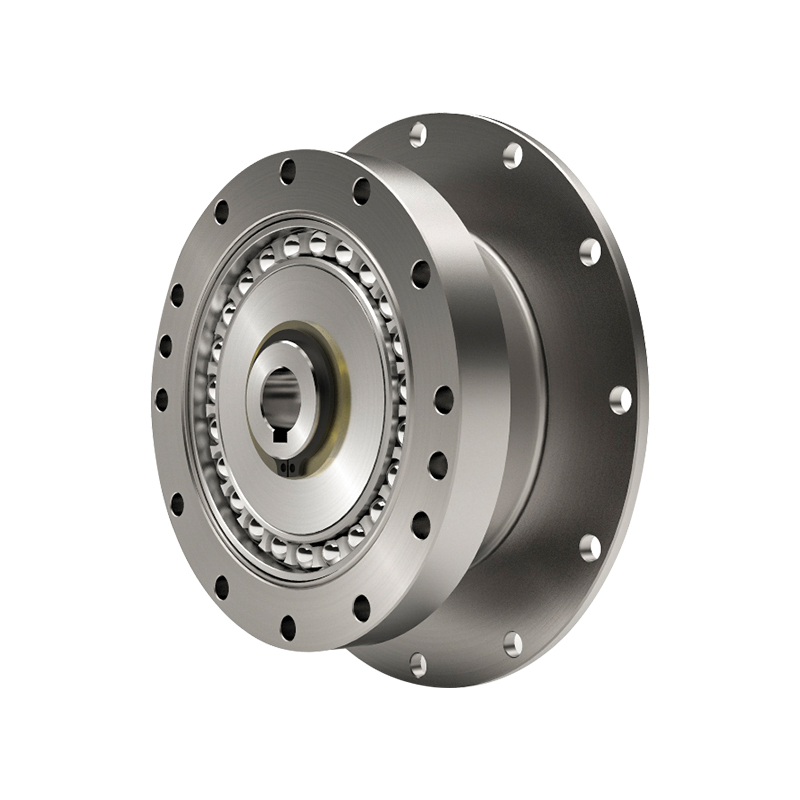 BSHF Series Flexible Gear Reducer with Large Hollow ShaftThis harmonic reducer offers a compact, lightweight design with high torque and backlash-free operation, making it a strong candidate for axes requiring long-term positioning accuracy and minimal maintenance.View Product →
Harmonic reducers win on torque per kilogram and package envelope at high ratios. Planetary gearboxes win on torsional stiffness per unit of torque and shock-load tolerance, the two properties that determine how fast an inverting servo axis actually settles.
Settling time is the axis-level price of low torsional stiffness. A softer drivetrain can reach the same final position, it just takes longer, because the gear element winds up and rings through resonance on the way.
For servo axes that index, dwell, and reverse all day, the stiffer planetary architecture simplifies tuning and improves throughput. The harmonic reducer's flexibility buys compactness and near-zero lost motion, but the wind-up reappears on every reversal. A deeper look at flexspline construction and precision behavior is available in this harmonic reducer deep-dive guide.
Planetary gearboxes sustain 92% to 96% efficiency across their working speed range. Harmonic reducers typically land between 74% and 85%, depending on ratio, and the energy difference is not lost on paper: it becomes heat inside a small, sealed housing.
In high-cycle automation, efficiency is a thermal issue before an energy-cost issue. Heat degrades grease, thins the oil film at the flexspline mesh, and accelerates fatigue. That is why continuous-duty torque of a harmonic reducer is usually derated well below its catalog peak in real automation cells.
At 2 kW throughput, the heat gap is repeatable: a 96% efficient planetary gearbox rejects about 80 W, while an 80% efficient harmonic reducer rejects 400 W into the same frame size. In high-cycle reversing duty, that extra heat drives lubrication temperature, maintenance intervals, and component life.
The AHB series planetary reducer is built for automation-equipment duty with precision-ground helical gears that hold efficiency through sustained reversing cycles.
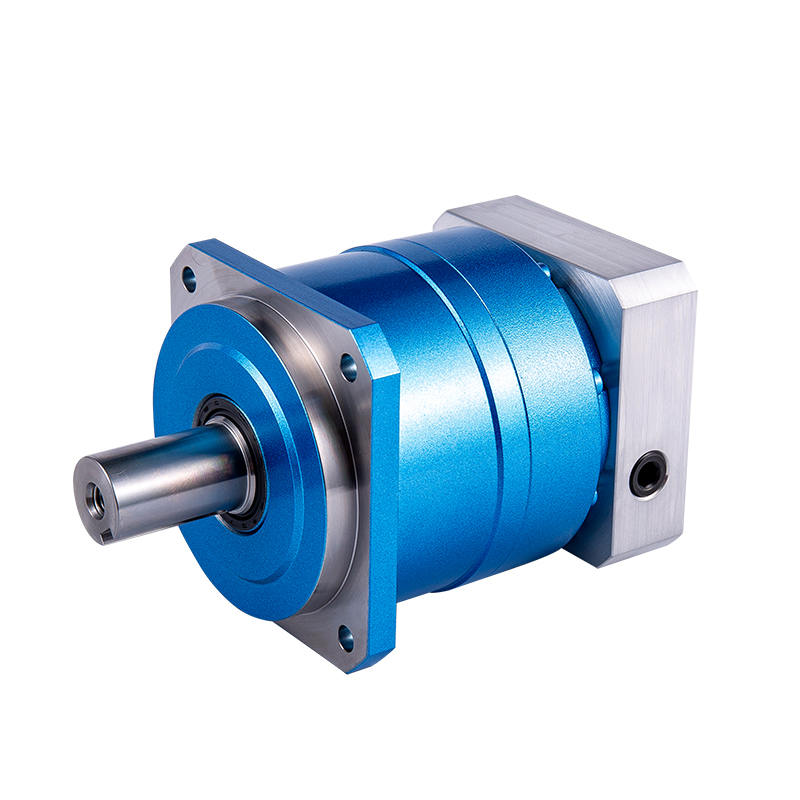 AHB Planetary Gearbox Reducer with Low Backlash and High PrecisionThis helical planetary reducer delivers backlash below 3 arcminutes, high stiffness, and no grease replacement, supporting durability and precise positioning in demanding automation applications.View Product →
The flexspline of a harmonic reducer is a fatigue-limited wearing part, rated in the 10,000 to 20,000-hour range under continuous rated torque. A planetary gearset with a clean oil charge and properly hardened teeth commonly exceeds 50,000 hours before tooth-flank maintenance is required.
Those numbers translate directly into production planning. At 5,000 operating hours per year, 20,000 hours is four calendar years. High-cycle automation lines usually change production models more often than they change reducers, so planned maintenance windows determine which architecture is financially viable.
A planetary gearbox is serviced in place with an oil change every 10,000 to 20,000 hours and a bearing inspection at the same interval. A harmonic reducer that reaches flexspline fatigue requires full disassembly to replace the cup and wave generator, which on a live production line usually means keeping a spare unit on site. The planetary gearbox design, applications, and selection guide covers the sizing and lubrication planning in more detail.
Field rule of thumb: in axes that reverse continuously, schedule a flexspline condition check at half the catalog fatigue life.
Choose a harmonic reducer when the axis demands sub-arcmin positioning and the load profile stays below the continuous-torque rating. Choose a planetary gearbox when the axis carries high torque cycles, shock loads, high speeds, or sustained operation without planned teardowns.
| Criteria | Preferred type | Reason |
| Positioning at or below 1 arcmin | Harmonic reducer | Zero-backlash mesh, near-zero lost motion |
| High reversing torque cycles | Planetary gearbox | Load sharing across planet gears |
| Continuous high-speed run | Planetary gearbox | 92-96% efficiency, lower heat input |
| Compact hollow-shaft package | Harmonic reducer | Pancake geometry with concentric bore |
| Shock above 200% rated torque | Planetary gearbox | Flexspline is fatigue-critical |
| Five-year service without teardown | Planetary gearbox | Longer practical overhaul interval |
| Fast servo settling | Planetary gearbox | Higher torsional stiffness per frame |
Decision order for a new axis: verify required backlash against process tolerance, compare continuous torque ratings at the actual load spectrum, check efficiency at the cycle rate, then compare overhaul intervals. The component that limits the axis first is the component you are buying.
For axes where low backlash must be paired with long-term dimensional stability rather than flexspline fatigue, the AHL series helical planetary reducer is the option to evaluate first.
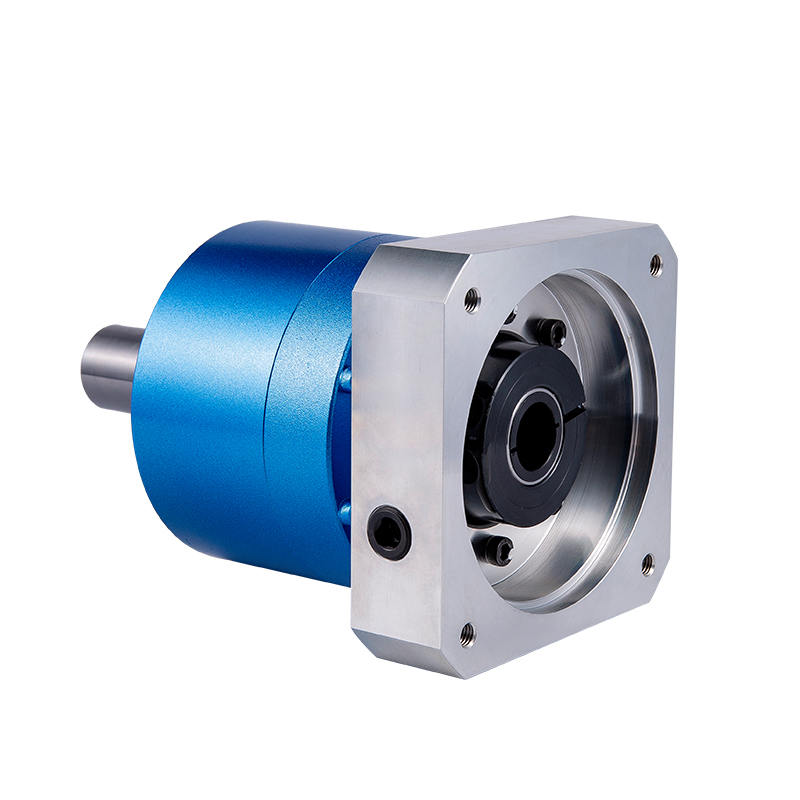 AHL Series Helical Planetary Reducer for Servo Motor ApplicationsThis planetary reducer features helical gears for quiet operation, integral ball bearings for rigidity, and lifelong grease lubrication, making it a reliable option for applications needing dimensional stability and low backlash.View Product →
Neither architecture is universally superior in high-cycle industrial automation. A harmonic reducer buys sub-arcmin precision with fatigue-limited flexspline life and lower efficiency. A planetary gearbox buys durability, stiffness, and efficiency at the cost of tighter backlash engineering. ZHEJIANG BEITTO TRANSMISSION TECHNOLOGY CO., LTD. (BEITTO) manufactures both flexible gear reducers and high-precision planetary reducers under the same quality system, so the selection can stay technical rather than commercial.
The fastest field decision: if both candidates meet torque and backlash, decide on efficiency, thermal rise, and published fatigue life at your specific cycle rate. All three appear in the datasheet.
A planetary gearbox generally lasts longer between overhauls. Hardened gear teeth, rolling bearings, and oil-bath lubrication let planetary gearboxes routinely exceed 50,000 hours, while harmonic reducer flexsplines are fatigue-rated from roughly 10,000 to 20,000 hours at rated torque. At 5,000 operating hours per year, that difference is measured in years of uptime.
Precision planetary gearboxes reach 1 to 3 arcmin backlash and, with preloaded meshes, hold repeatable positioning for demanding indexing profiles. A harmonic reducer still wins where true sub-arcmin positioning is required. If the encoder resolution and the process tolerance sit below 1 arcmin, specify the harmonic reducer.
The 10 to 20 point efficiency gap between a planetary and a harmonic reducer appears as heat inside the housing. Sealed reducers reject heat only through their external surface, so the less-efficient type runs hotter at equal throughput. In high-cycle duty, each additional 10 degrees Celsius of oil temperature roughly halves grease or oil life.
Use the manufacturer's continuous-torque rating, never the peak catalog torque. For high-cycle reversing duty with frequent peaks above rated torque, apply a service factor of 1.5 to 2.0 and validate flexspline fatigue at the actual load spectrum. Peak torque in the catalog is a survival number, not an operating number.
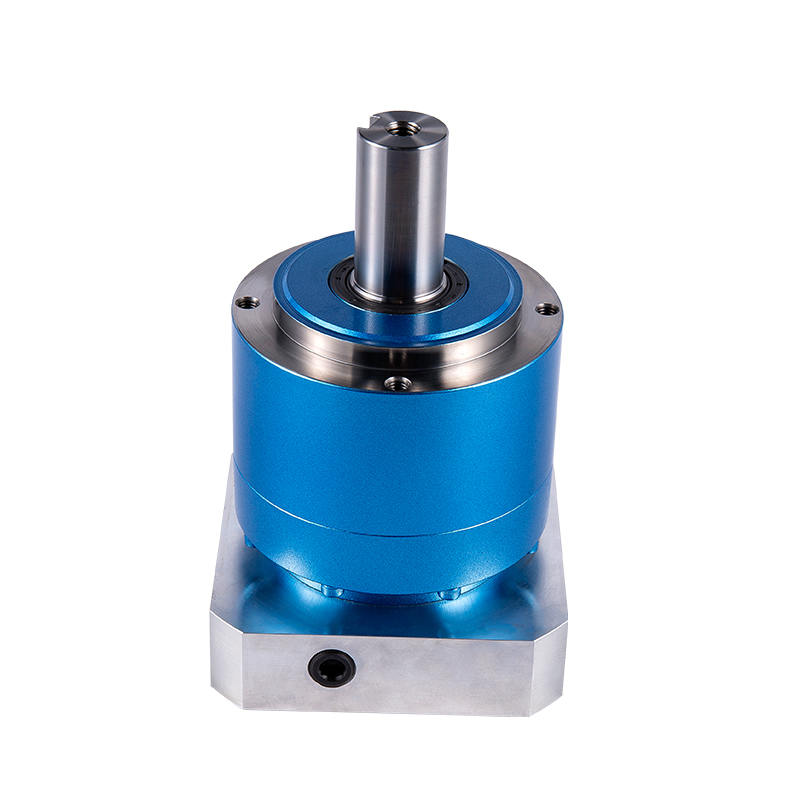
Planetary reducers have been widely used in many industries for their performance. Their uniquely de...
See Details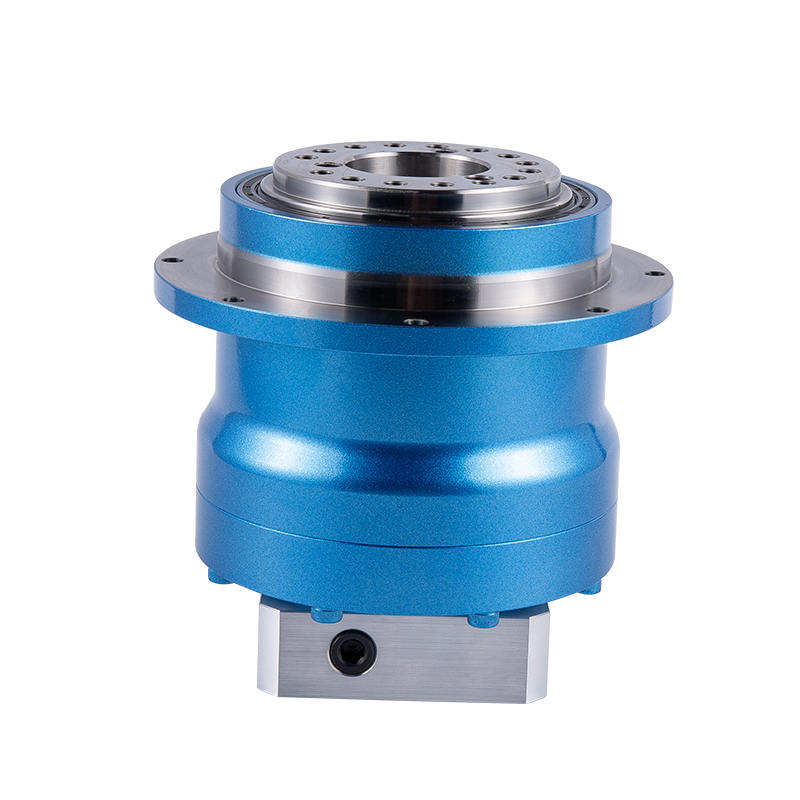
With its high-precision characteristics, the planetary reducer successfully controls the backlash wi...
See Details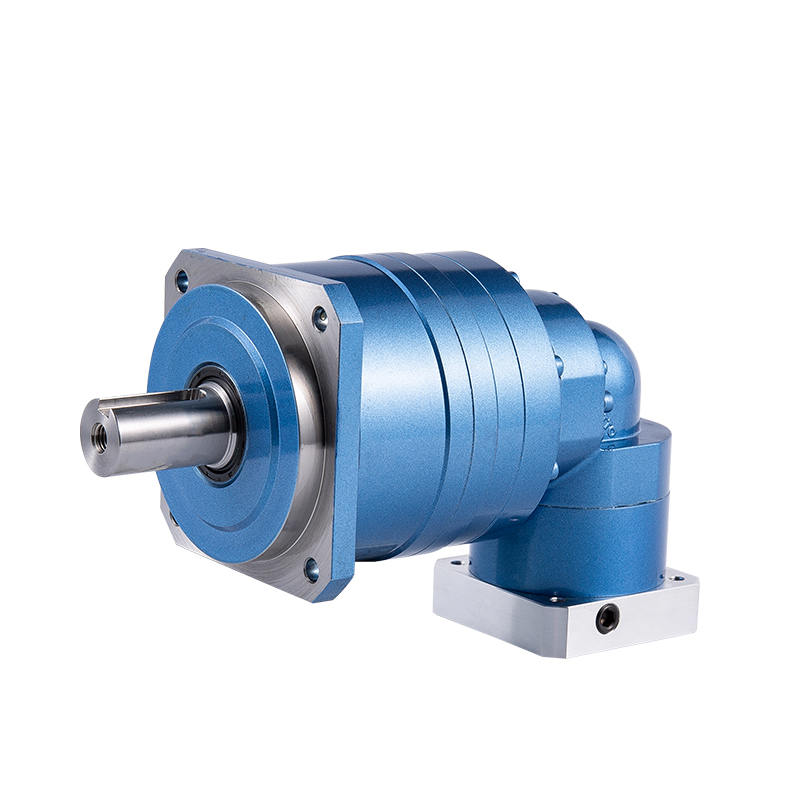
The planetary reducer adopts a helical gear design, which enables smooth and quiet operation and pro...
See Details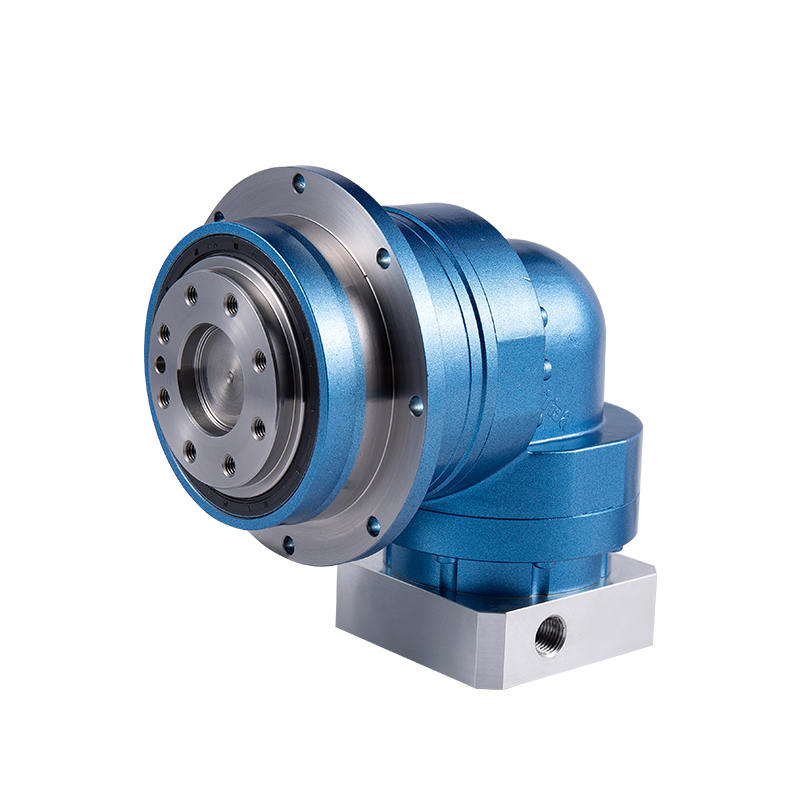
Features of planetary reducer1. High precision: the standard backlash is 4 arc minutes, which is ver...
See Details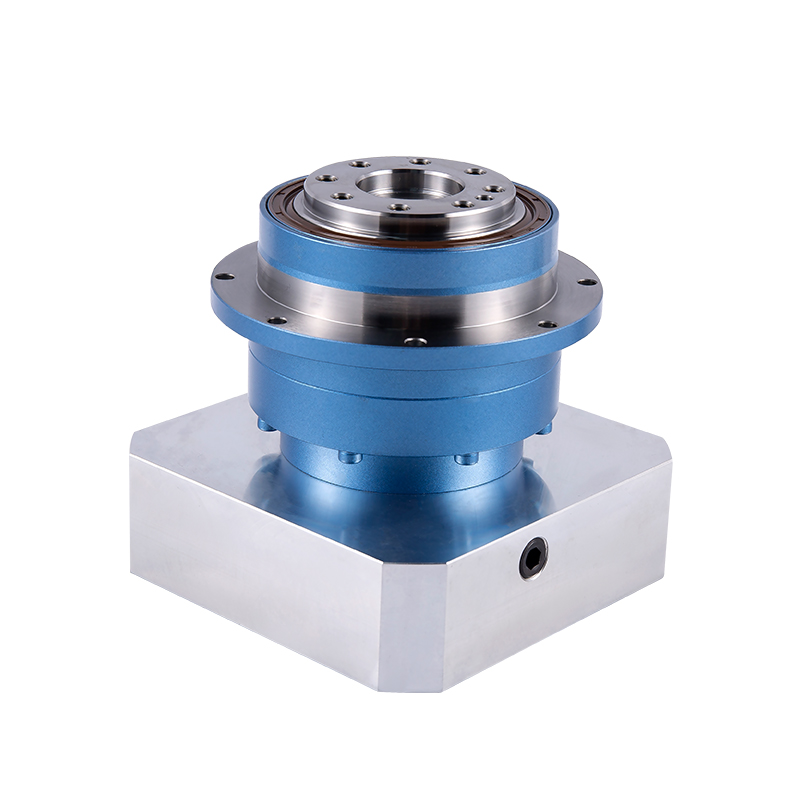
The NHT series planetary reducer adopts an advanced helical gear design, which not only significantl...
See Details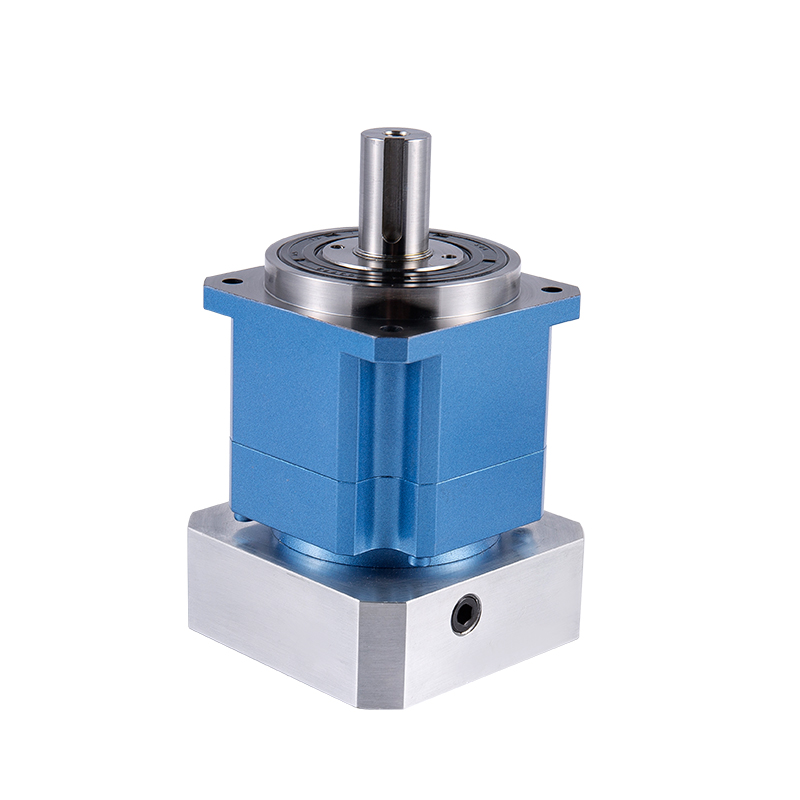
1. NBR series planetary reducer adopts spiral bevel gear design, with high rated output torque, more...
See Details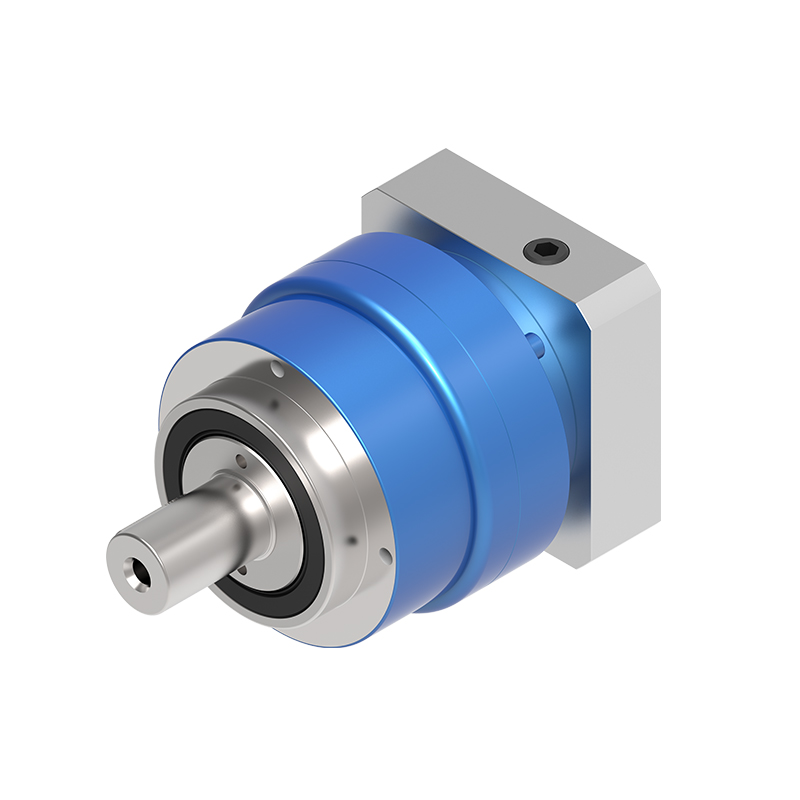
Innovative helical gear structureThe reduction mechanism introduces an innovative helical gear desig...
See Details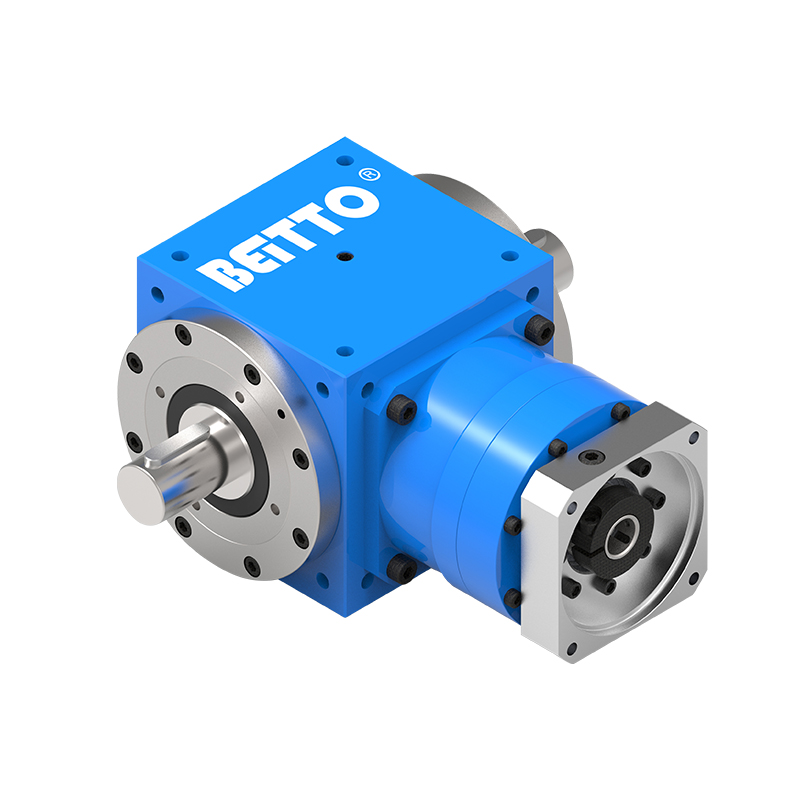
In order to meet the needs of different working conditions, the TD-2P series reducer provides a vari...
See Details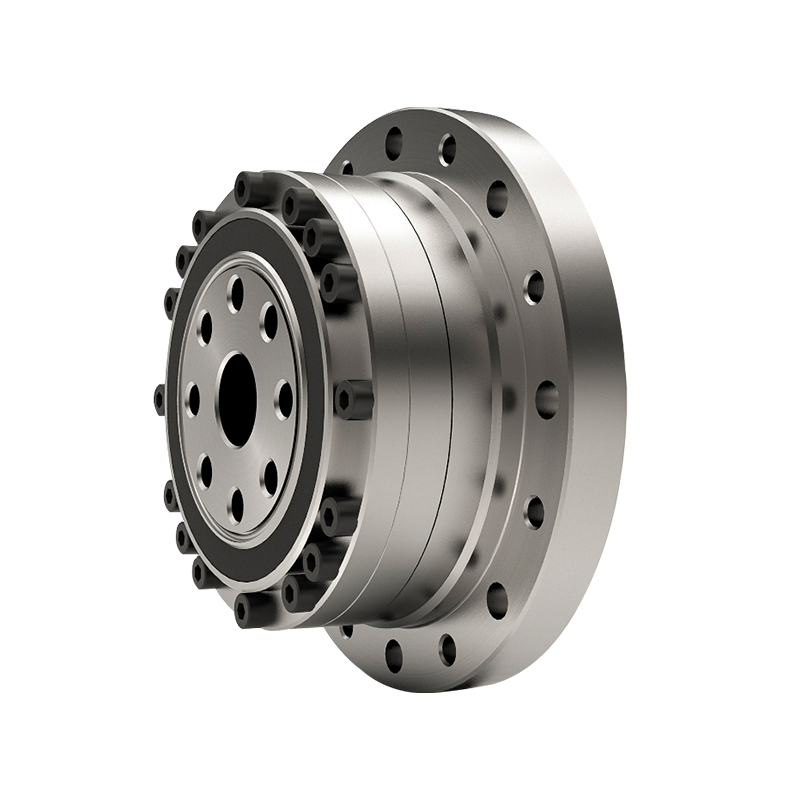
The BCSG series Flexible gear reducer is designed to be light and simple, which not only effectively...
See Details
BSHF series Flexible gear reducer adopts a large-diameter hollow shaft design with a compact structu...
See Details

