 EN
EN




 English
 русский
 日本語
日本語 Español
High Speed High Torque Flexible Low Backlash BCSF Harmonic Drive Gearbox Harmonic Reducer
The BCSF series Flexible gear reducer pursues the ultimate lightness and simplic...
Flexible gear reducers have been widely used in aviation, aerospace, bionic machinery, machine tools, electronic equipment, transportation, robot joints, industrial robots, medical equipment, etc.
1. In terms of technological innovation, Beto has created a unique forward parametric design of “B-DA” tooth shape of steel wheel flexure and “B-C” contour curve of the cam; under the same model, the number of teeth meshing at the same time is 15-20% larger than the counterparts, which is far ahead in the industry in terms of precision, load bearing capacity, and life span; through simulation optimization of the elastic deformation part of flexure wheel and contour modification to solve the technical problems of resonance jitter in the industry and reduce the tolerance rate of the motor, and independently research and develop the self-centering tooling of liquid expansion to ensure the machining precision and assembly precision. and assembly precision;
2. In terms of product life, this series of products adopts self-developed formula metal materials, and advanced cold and hot treatment processes, through simulation optimization, flexible wheel wall repair design to adapt to the larger elastic deformation, reduce the performance requirements for flexible bearings, significantly improve the life of the reducer, test shows that the product life is more than 20,000 hours, which is far ahead in the industry.
3. In terms of product performance, the high-performance Flexible gear reducer of Beto Transmission Technology adopts self-developed formula materials with advanced technology, combining high precision, high rigidity, and long service life, and has been certified by the industry-recognized harmonic comprehensive performance tester, and the indexes of transmission error, torsional rigidity, backlash, start-up torque and torque fluctuation are comparable to the industry benchmarks. for example, the product's initial transmission precision is ≤1 arc minute, and after 10000 hours, the precision degradation is <1 arc minute. For example, the initial transmission precision of the product is ≤1 arc minute, and after 10000 hours, the precision degradation is <1 arc minute, which is on a par with the highest level in the industry.
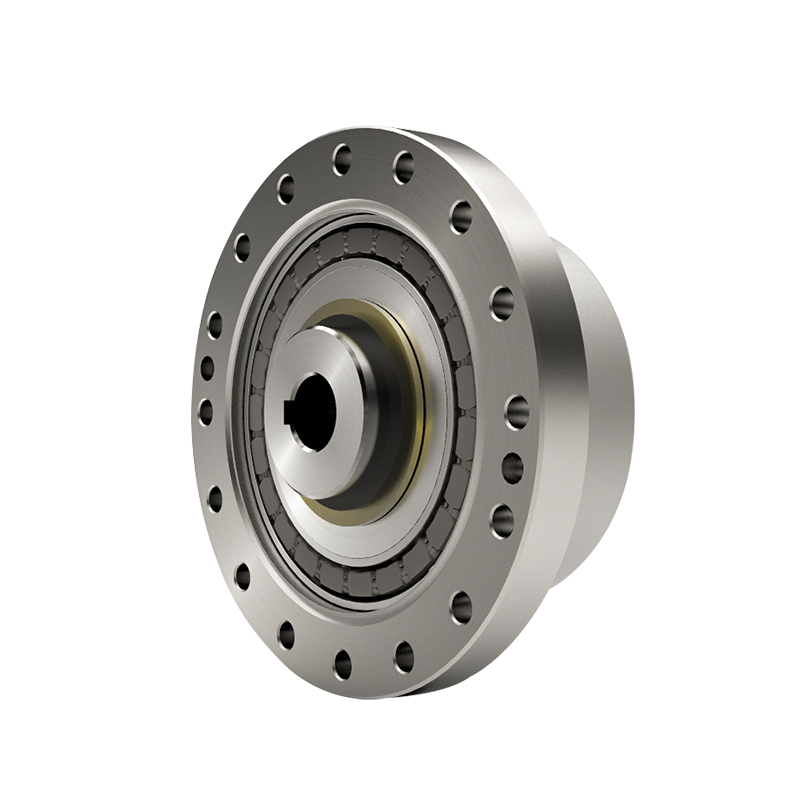
The BCSF series Flexible gear reducer pursues the ultimate lightness and simplic...
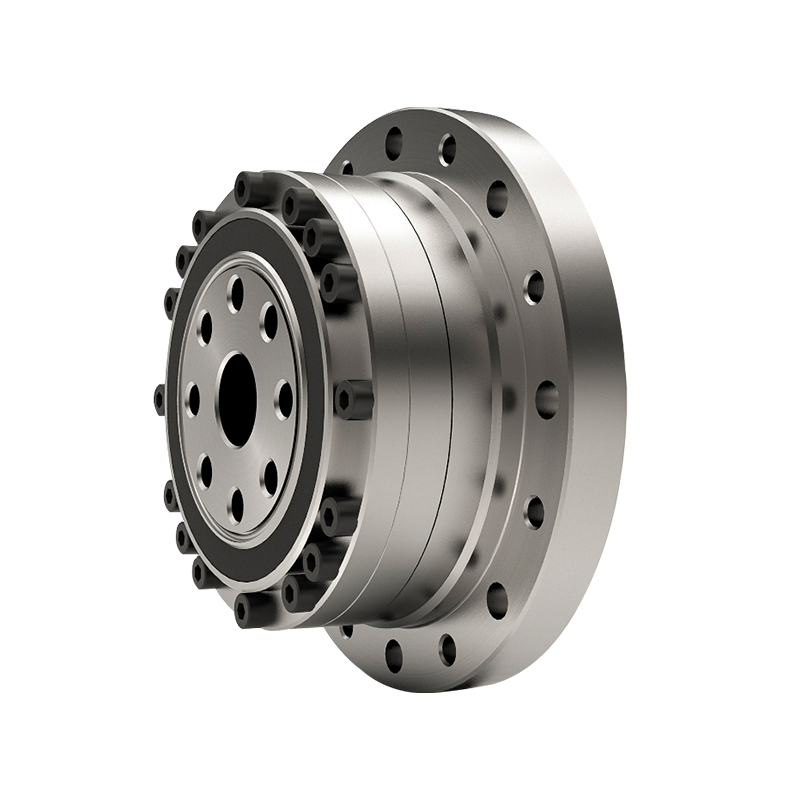
The BCSG series Flexible gear reducer is designed to be light and simple, which ...
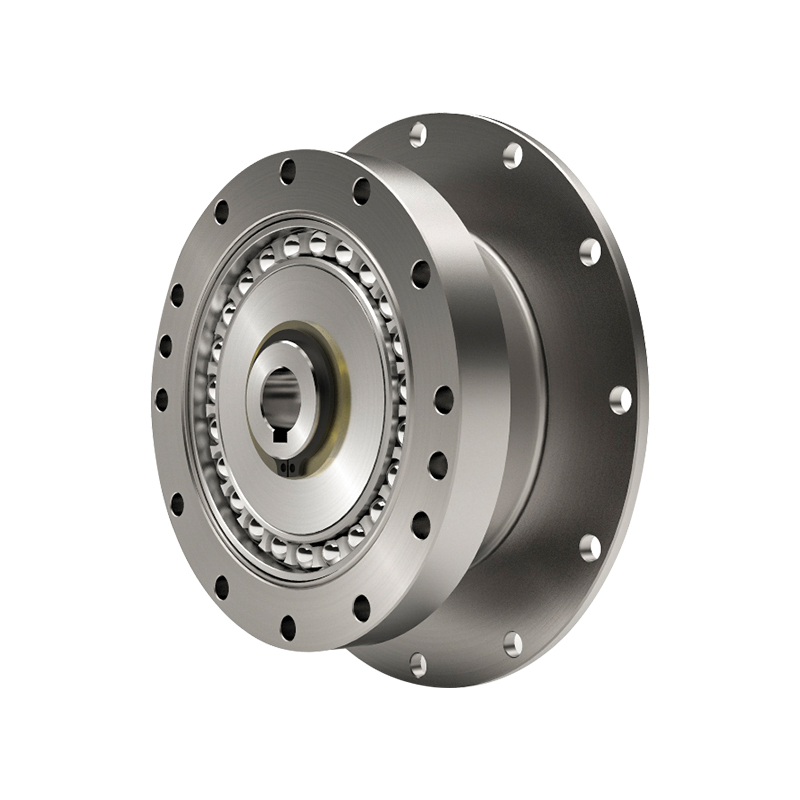
BSHF series Flexible gear reducer adopts a large-diameter hollow shaft design wi...
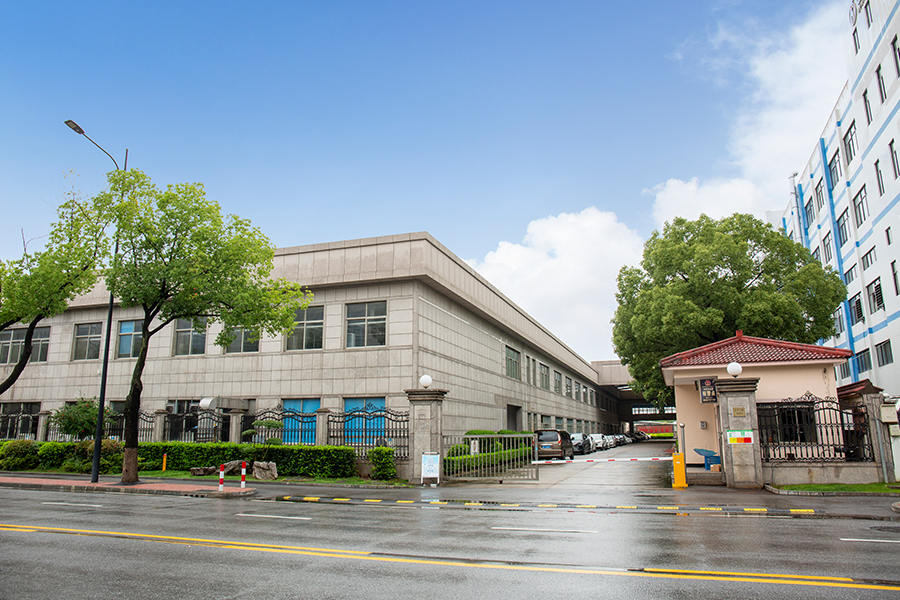
The company has always adhered to the Japanese electromechanical cutting-edge R & D technology, adhering to the Japanese meticulous production process, the use of leading design and development technology to research new products, to achieve the optimization and upgrading of the product structure renewal. As a
Flexible Gear Reducer Manufacturers and
Flexible Gear Reducer Suppliers, we Offer
Flexible Gear Reducer.
The city - Pinghu City, Zhejiang Province, National Economic and Technological Development Zone, the province's only one approved by the provincial government of the Japanese investment zone, the National (Jiaxing) Electromechanical Components Industrial Park and the National Torch Plan Pinghu Optical and Mechanical Industrial Base core area, Pinghu City is located in China's most dynamic economy of the Yangtze River delta region, is located in the northeastern part of Zhejiang Province, east of China's economic, financial, and information center -It is located in the northeastern part of Zhejiang Province, neighboring Shanghai to the east and Hangzhou Bay to the south. The city has a land area of 537 square kilometers, a sea area of 1,086 square kilometers and a coastline of 27 kilometers. It has a total population of 800,000 people.
A compact SCARA robot arm performing 24/7 pick-and-place at 0.4 s cycle time, with a 2 kg payload and 3,000 hours of continuous operation, makes the...
An engineer sizing a servo-driven rotary table found positioning error climbing past 0.15 degrees, the gearbox case running at 82 C, and the drive t...
At a 40-unit robotic packaging cell, the quarterly re-greasing schedule is a line item of its own: four hours of downtime, two technicians, fresh lu...
Industry News By: Beitto Transmission Technical Team Filed in: Mechanical Engineering & Power Transmission In the domain of industrial automati...
A Flexible Gear Reducer, also known as a harmonic drive or strain wave gearing, is a high-precision mechanical transmission device that achieves speed reduction through elastic deformation of a flexible component. Unlike traditional rigid gear reducers, it operates on a fundamentally different principle: a flexible spline is dynamically deflected by a wave generator to engage with a rigid circular spline at two diametrically opposite points. This design enables zero-backlash operation, high reduction ratios in a single stage, and exceptional positional accuracy.
Flexible gear reducers are distinguished by several critical performance parameters:
| Industry Sector | Specific Application | Why Flexible Gear Reducer is Chosen |
|---|---|---|
| Robotics | Joint actuators for collaborative robots (cobots) and industrial arms | Zero backlash and high precision for repeatable positioning |
| Aerospace | Actuators for satellite solar panels and flight control surfaces | Lightweight, high ratio, and reliable performance under vacuum |
| Medical Equipment | CT scanners, surgical robots, and prosthetic joints | Smooth, quiet motion and compact form factor |
| Semiconductor Manufacturing | Wafer handling robots and precision stage drives | Vibration-free operation and micron-level accuracy |
| Machine Tools | Indexing tables and tool changers | High torsional stiffness and positional repeatability |
A quality flexible gear reducer relies on three critical components: the flexible spline (made of high-fatigue-strength alloy steel such as Nihon Kogyo Hattai or equivalent), the rigid circular spline, and the wave generator (with precision ball bearings). The flexible spline undergoes special heat treatment to achieve a hardness of HV 700–800 while maintaining elastic limits. The tooth profile is a critical design element—proprietary optimized profiles prevent tooth tip interference and ensure uniform load distribution.
When choosing a flexible gear reducer for your application, consider these factors:
| Parameter | Flexible Gear Reducer | Traditional Planetary or Worm Reducer |
|---|---|---|
| Backlash | Zero (factory set) | 3–15 arc min typical |
| Single-stage Ratio | Up to 320:1 | Typically ≤10:1 (planetary) |
| Weight for Same Torque | 30–50% lighter | Heavier |
| Noise Level | <55 dB(A) typical | 65–80 dB(A) |
| Service Life | 8,000–15,000 hours under rated load | 20,000+ hours but with maintenance |
Zhejiang Beitto Transmission Technology Co., Ltd. produces flexible gear reducers that follow Japanese electromechanical R&D standards, incorporating a meticulous production process. Each unit undergoes 100% dynamic testing for lost motion, no-load torque, and temperature rise before shipment. Our design and development technology optimizes tooth geometry and flexible spline wall thickness for extended service life. Located in the Pinghu National Economic and Technological Development Zone, we serve global OEMs requiring consistent quality and technical support for motion control applications.
Q1: What is the maximum reduction ratio available in a single-stage flexible gear reducer?
A: A single-stage flexible gear reducer can achieve reduction ratios from 30:1 up to 320:1. Beyond 320:1, efficiency drops significantly due to increased elastic deformation stress on the flexible spline. For higher ratios, two-stage units are available but are rarely needed for most industrial applications.
Q2: Can a flexible gear reducer withstand shock loads?
A: Flexible gear reducers are sensitive to instantaneous shock loads exceeding 200% of rated torque. Unlike rigid gearboxes, the flexible spline can plastically deform under severe overload. For applications with regular impact loads, select a unit with 2–3 times the calculated required torque rating and install a torque limiter upstream.
Q3: How does temperature affect the performance of a flexible gear reducer?
A: Operating temperature directly influences grease viscosity and flexible spline fatigue life. At temperatures below -10°C, grease thickens and no-load torque increases by up to 40%. Above 80°C, grease degradation accelerates and the flexible spline’s fatigue life may reduce by 30–50%. Maintain the housing temperature between 10°C and 60°C for optimal lifespan.
Q4: What is the typical service life of a flexible gear reducer from Zhejiang Beitto Transmission Technology Co., Ltd.?
A: Under rated load, smooth operation, and proper lubrication, our flexible gear reducers achieve 10,000 hours of service life (L10 life, meaning 90% of units survive this duration). Lifespan reduces to approximately 5,000 hours when operating continuously at 150% of rated torque. Regular grease replacement every 3,000 hours extends operational life significantly.
Q5: How do I measure and verify zero backlash during installation?
A: To verify zero backlash, lock the output shaft and apply a slight oscillating torque (approximately 5% of rated torque) to the input shaft using a torque wrench. Use a dial indicator on the output shaft. If any angular movement exceeding 0.5 arc minutes is observed, the reducer may be damaged or improperly mounted. Zero backlash is maintained only when the wave generator’s elliptical deformation perfectly matches the flexible spline’s elastic recovery. Our factory test reports confirm each unit meets ≤1 arc min lost motion.


