 EN




 English
 русский
 日本語
 Español
Helical Tooth Transmission Gearbox Planetary Reducer AHL Series for Servo Motor
Cat:Planetary Reducer
Planetary reducers have been widely used in many industries for their performance. Their uniquely de...
See DetailsThree months after a battery-module assembly line reached full speed, the spur gear reducers on its rotary indexing tables began to whine above the plant floor's 75 dB(A) target. By month six, return clearance on two units had grown enough to shift the mechanical zero, and the rework rate on that line doubled. The root cause was visible in the gear geometry itself.
High-speed automation equipment does not tolerate this failure mode. When engineers compare helical planetary gearboxes against spur gear reducers for this service, they are not comparing two equivalent products; they are comparing two approaches to tooth engagement, load distribution, and backlash control. This article explains the structural difference, the measured performance gap, and the selection criteria that matter when cycle time and repeatability drive the purchase decision.
Content
Spur gear reducers lose their economic advantage as soon as the application requires both high input speed and tight positioning repeatability. Beyond that point, the gear geometry itself is the constraint.
Spur gear teeth mesh along a line parallel to the shaft axis, so the entire tooth face enters and leaves contact at the same instant. Each mesh releases an impact pulse, and the pulse amplitude grows with the square of rotational speed. The consequences appear in three measurable areas:
Helical planetary gearboxes replace simultaneous full-face tooth contact with progressive, overlapping engagement, which suppresses the impact excitation that limits spur reducers at speed.
Helical teeth are cut at an angle to the shaft axis, so engagement begins at one edge of the tooth face and sweeps across the width. At any instant, two or more tooth pairs share the transmitted load. The total contact ratio rises from about 1.3 on a spur pair to 1.6–2.0 on a helical pair, while the planetary stage splits torque among three or more planet gears. Lower peak tooth stress, smoother torque delivery, and quieter operation follow from this geometry.
Contact ratio is the average number of tooth pairs engaged during one meshing cycle. A value above 1.5 means the load is continuously shared by more than one pair, which reduces peak stress and steadies output rotation.
Three structural features carry the benefit into high-speed automation duty:
The helix angle is also a tunable parameter. ZHEJIANG BEITTO TRANSMISSION TECHNOLOGY CO., LTD. (BEITTO) uses helical tooth planetary stages in its AHL series for automation duty, where reduced meshing impact directly improves the long-term stability of the output position.
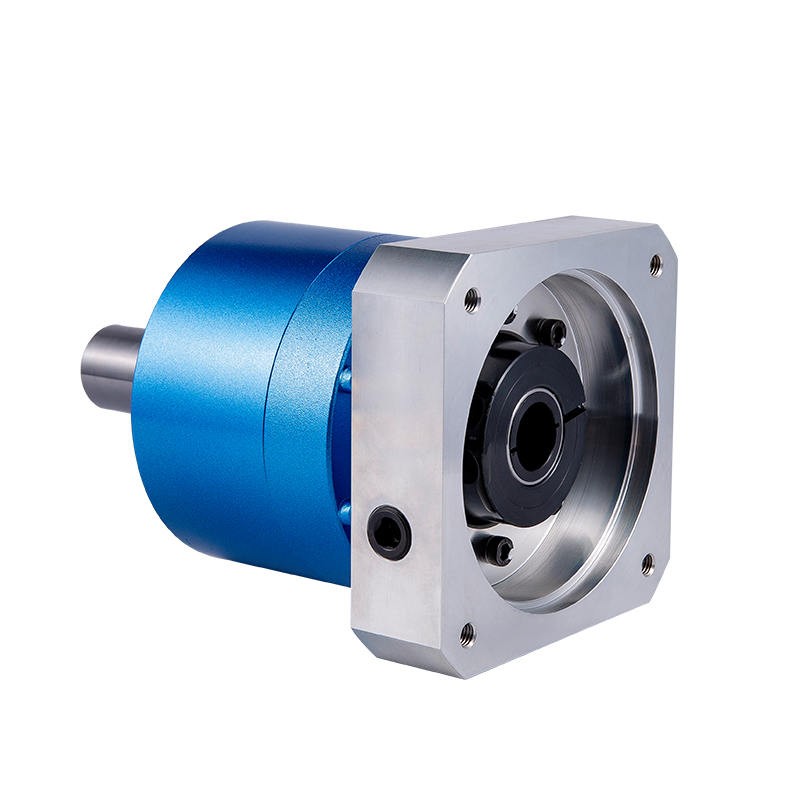 BEITTO AHL Series Helical Planetary Gearbox for Servo MotorsThis helical-tooth planetary reducer is highlighted for automation duty, where its reduced meshing impact supports stable output positioning. Its design prioritizes smooth operation, low noise, and flexible motor mounting.View Product →
Three measured parameters separate a helical planetary gearbox from a spur gear reducer in automation service: backlash, single-stage efficiency, and sound pressure level.
The range below reflects typical precision-class products. A spur reducer can meet its catalog backlash when new, but the wear rate under high-speed impact is the real variable. Helical planetary units start lower and retain that class longer.
| Parameter | Spur reducer | Helical planetary gearbox |
| Single-stage efficiency | 93–95% | 95–97% |
| Precision backlash | 6–10 arcmin | 1–3 arcmin |
| Contact ratio | 1.2–1.4 | 1.6–2.0 |
| Noise at 3,000 rpm, 1 m | 75–82 dB(A) | 65–72 dB(A) |
| Positioning repeatability | 2–3 arcmin | 0.5–1 arcmin |
Every row converts into an operational cost. Higher backlash forces the servo loop to use lower gains, which lengthens settling time and adds milliseconds to every positioning cycle. Milliseconds accumulate into lost output over a shift, and the loss compounds over a year.
In high-speed automation, gearbox quality converts directly into production revenue through cycle time, scrap rate, and maintenance intervals.
Start with efficiency. A 2% difference in single-stage efficiency on a 7.5 kW servo drive is roughly 150 W of heat generated continuously inside the gearbox. Higher oil temperature thins the lubricant film, raises friction, and shortens bearing life. The efficiency row is not datasheet trivia; it is the input to the thermal budget of the whole drive train.
The larger cost is downtime. When a spur reducer's backlash doubles after 8,000 hours, the station must be retuned or the gearbox replaced. The replacement cost is small compared with the production lost while the line stands still. A precision helical planetary gearbox with 1–3 arcmin backlash typically holds its positioning specification several times longer.
Total-cost-of-ownership math should decide the order. The purchase premium for a helical planetary gearbox is normally recovered within 12–18 months in high-speed service through lower scrap, shorter cycle times, and longer maintenance intervals.
Automation also imposes a specific duty pattern: frequent start-stop cycles, reversing torque, and near-continuous running at rated input speed. BEITTO's AHB series is engineered for that profile, with a housing and bearing layout sized for repeated positioning work rather than occasional motion.
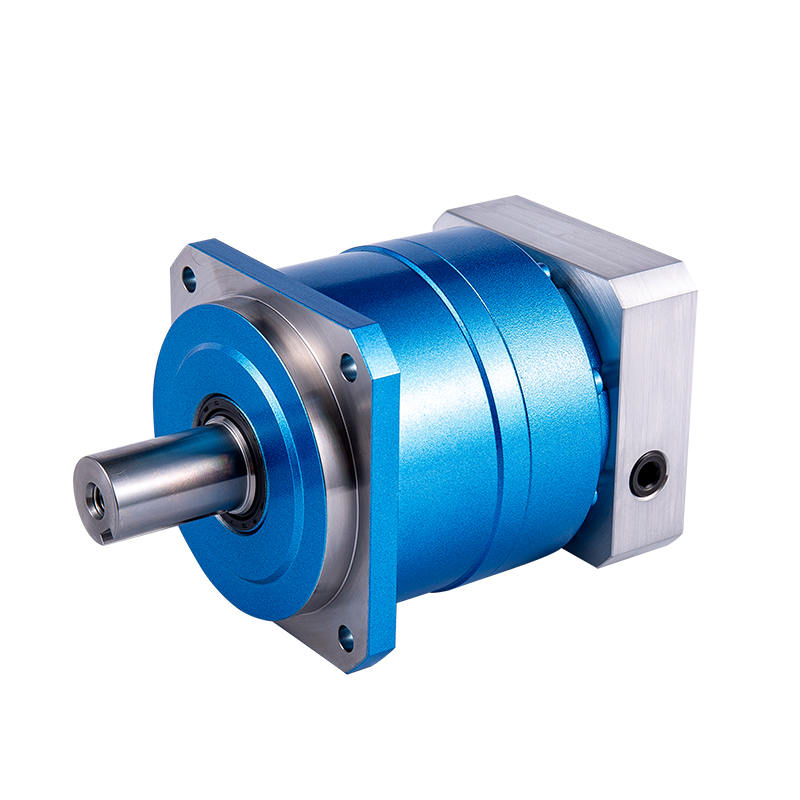 BEITTO AHB Series Low Backlash Planetary Gearbox ReducerEngineered for repetitive positioning and reversing torque, this unit offers backlash below 3 arcminutes and high rigidity. Its through-hole output and flange mount suit frequent start-stop automation tasks.View Product →
Qualify a helical planetary gearbox for high-speed automation against five specifications: backlash class, input speed rating, efficiency curve, noise test data, and service factor.
Work through this checklist with the supplier's data sheets before comparing prices. The cheapest unit becomes the most expensive one when it fails a field requirement.
These five checks eliminate most of the field failures that appear three to eight months after installation in high-speed automation equipment.
BEITTO publishes application-focused resources that follow the same logic; this analysis of the AHB series in automation equipment walks through the reasoning machine builders need before selecting a gearbox.
The questions below are the ones automation engineers raise most often when a helical planetary gearbox is shortlisted.
In most automation layouts, yes. Mounting dimensions follow the same flange and shaft standards, and single-stage efficiency is equal or higher, so the motor does not work harder. The servo loop may need retuning because the lower backlash and higher torsional stiffness of the helical planetary unit allow higher gain settings.
In precision applications, problems become measurable above 1,500 rpm. Between 1,500 and 3,000 rpm, noise rises by several decibels and vibration accelerates backlash wear. Above 3,000 rpm, the impact pulse from simultaneous tooth engagement begins to limit the reducer's service life.
Helical teeth generate axial thrust, and the gearbox designer must size bearings for that force. In a correctly engineered helical planetary gearbox, the reduction in impact loading outweighs the bearing thrust penalty, so overall service life in high-speed duty is longer than an equivalent spur unit.
BEITTO and other precision manufacturers rate service life in the range of 20,000 to 30,000 hours at rated torque. Gear teeth normally outlast the bearings and seals in this service, so the practical replacement interval is set by bearing fatigue and lubricant condition.
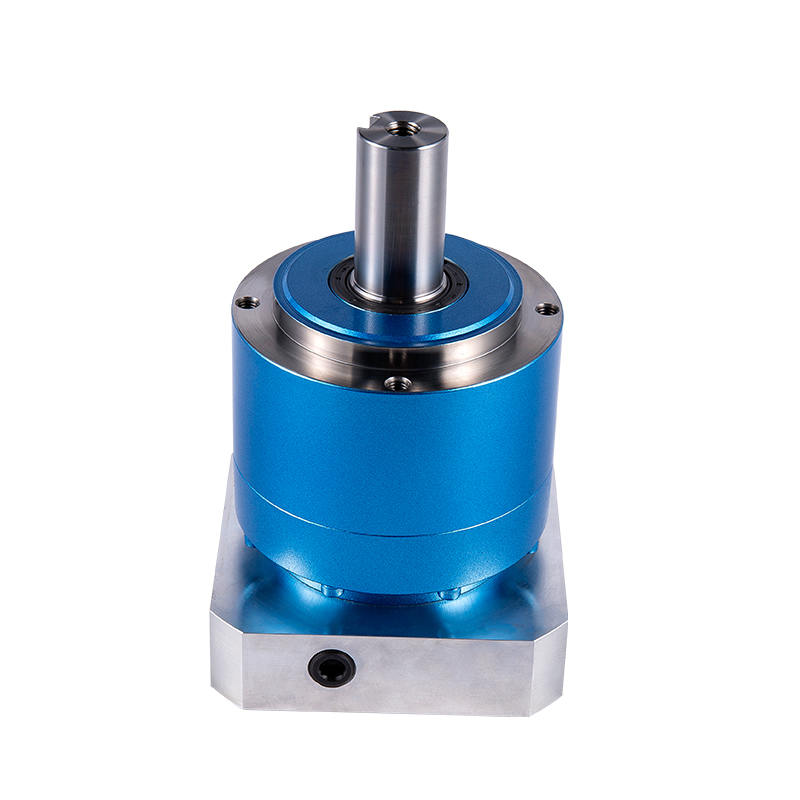
Planetary reducers have been widely used in many industries for their performance. Their uniquely de...
See Details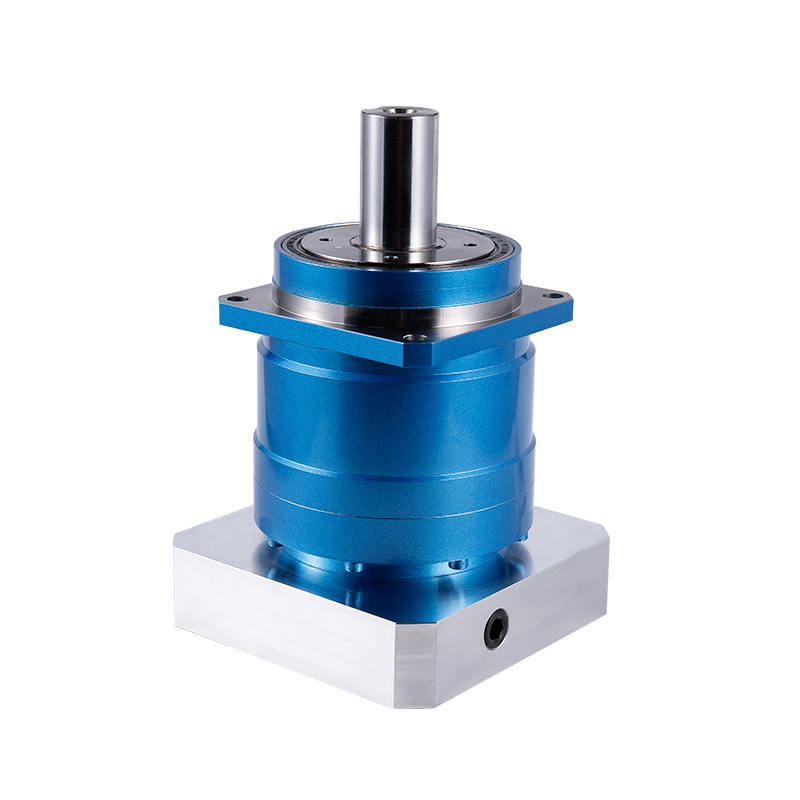
Planetary reducers occupy an important position in the field of industrial automation. The high-prec...
See Details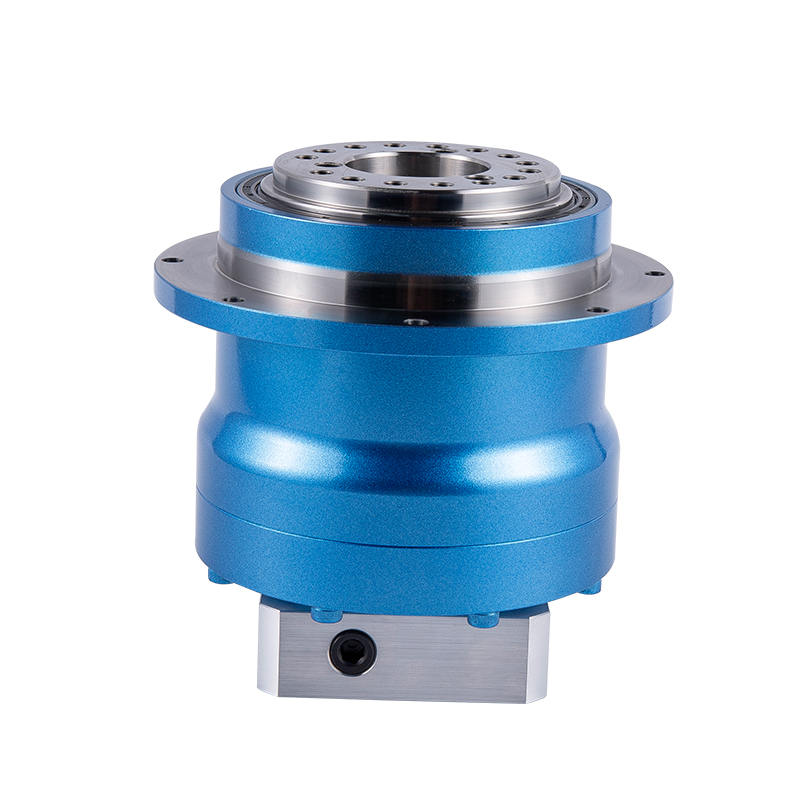
With its high-precision characteristics, the planetary reducer successfully controls the backlash wi...
See Details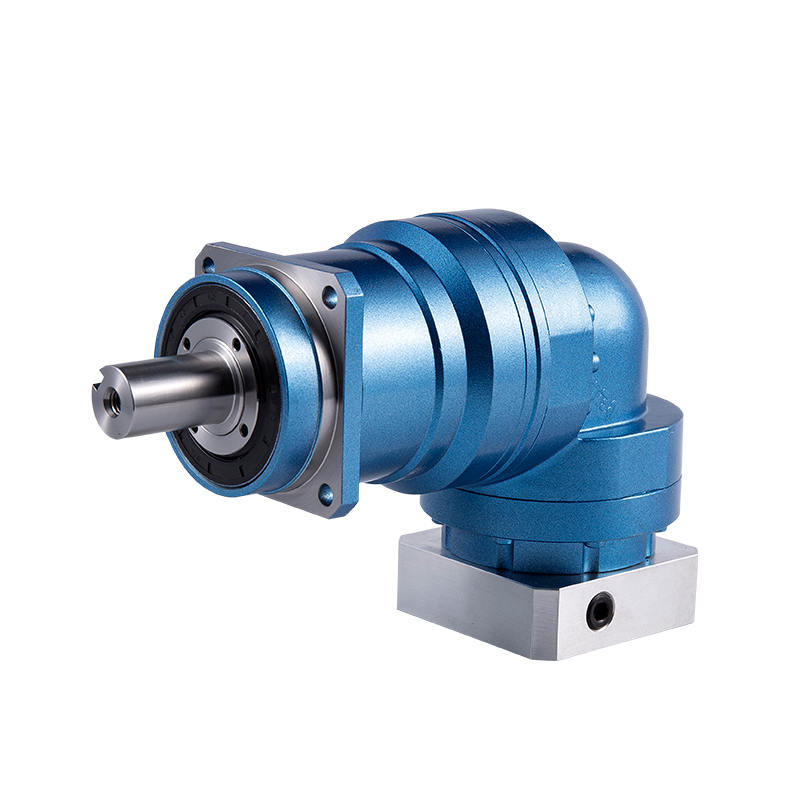
Features of planetary reducer1. Quiet: Use helical gears to achieve smooth and quiet operation;2. Hi...
See Details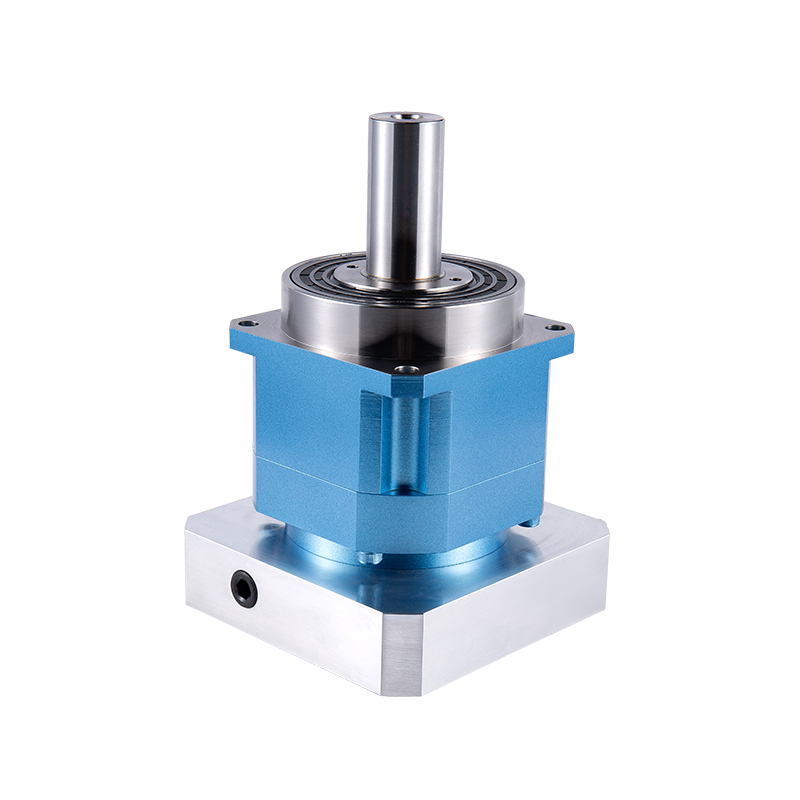
Our reducers incorporate the cutting-edge design concept of helical gears. Compared with traditional...
See Details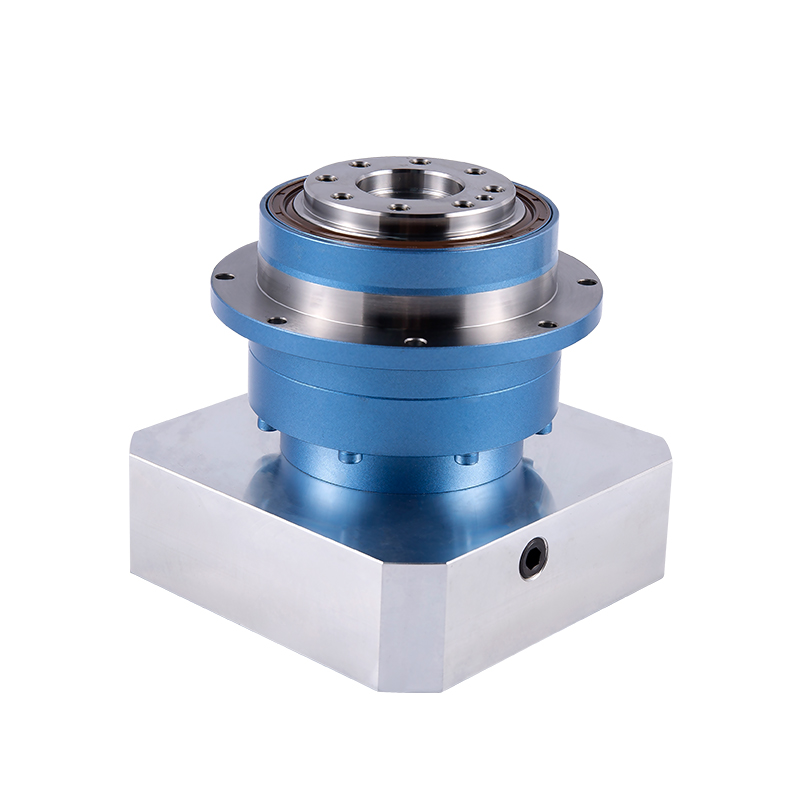
The NHT series planetary reducer adopts an advanced helical gear design, which not only significantl...
See Details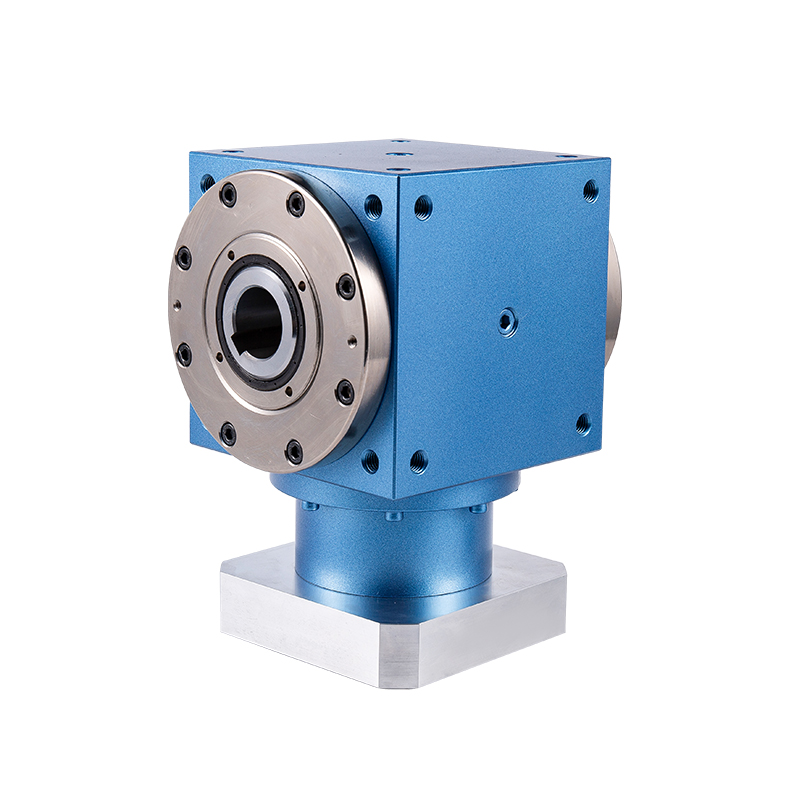
The TD-CR series reducer is centered on the design of hollow shaft output, which not only optimizes ...
See Details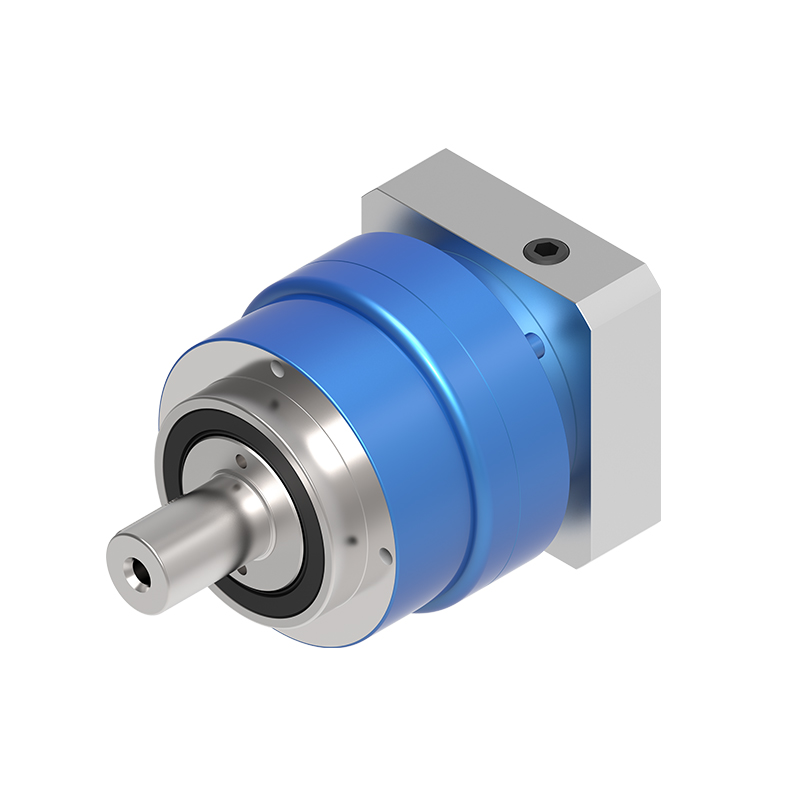
Innovative helical gear structureThe reduction mechanism introduces an innovative helical gear desig...
See Details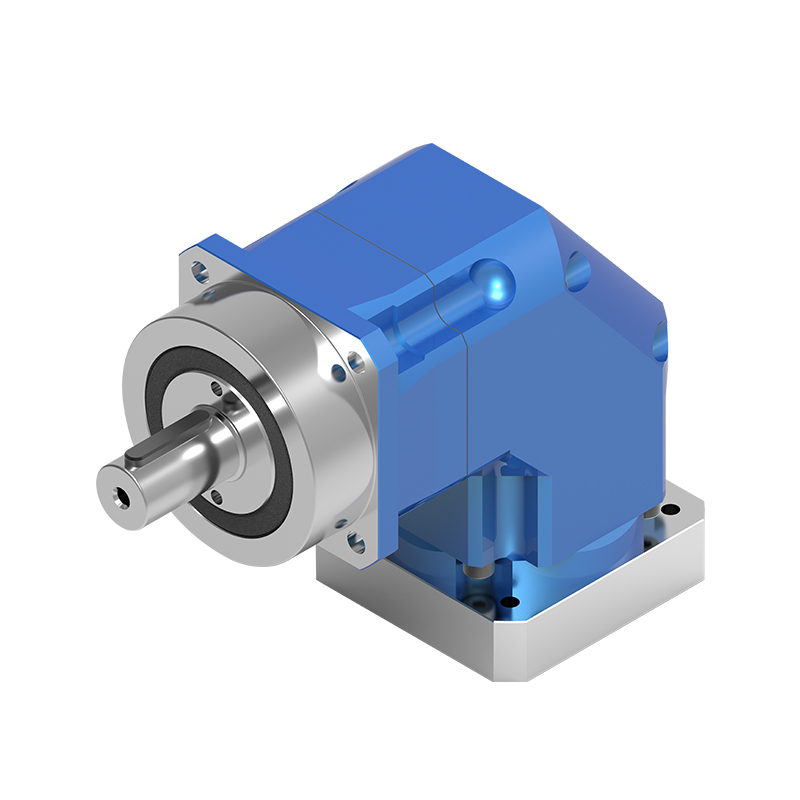
The NSR series planetary reducer adopts a spiral bevel gear design. This innovation not only makes t...
See Details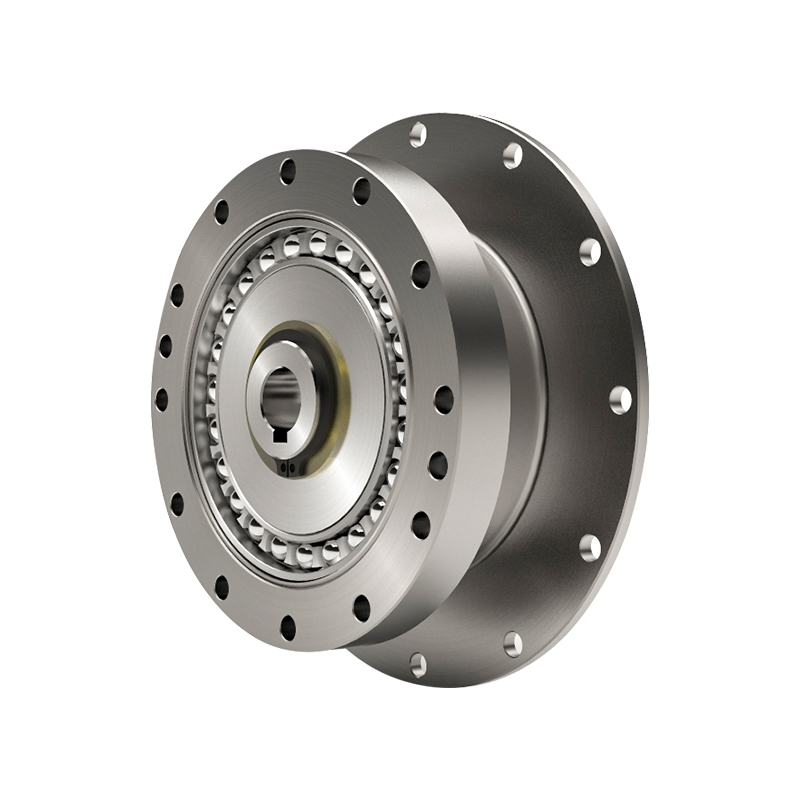
BSHF series Flexible gear reducer adopts a large-diameter hollow shaft design with a compact structu...
See Details

