 EN
EN




 English
 русский
 日本語
日本語 Español
Helical Tooth Transmission Gearbox Planetary Reducer ABR series
Cat:Planetary Reducer
The planetary reducer adopts a helical gear design, which enables smooth and quiet operation and pro...
See DetailsContent
The fourth industrial revolution has brought unprecedented demands for motion control precision. Robotic arms must assemble microelectronic components with sub-millimeter accuracy. CNC machine tools must maintain tight tolerances while cutting at high speeds. Semiconductor manufacturing equipment must position wafers with micron-level repeatability. Medical robots must perform delicate surgeries with smooth, backlash-free motion.
At the core of these high precision motion systems lies the gear reducer. Among the various reducer technologies available, the precision planetary gear reducer has emerged as the preferred solution for applications requiring high torque density, low backlash, and long service life in a compact package. Unlike traditional parallel shaft gearboxes, planetary designs distribute load across multiple planet gears, achieving exceptional torque capacity relative to size.
This article provides a comprehensive technical comparison of precision planetary gear reducers against alternative technologies, with a focus on helical versus spur gear configurations, backlash classifications, torque ratings, efficiency, and material selection. For automation engineers and procurement professionals, this guide serves as a reference for selecting the appropriate planetary reducer for different precision requirements, load conditions, and operating environments.
A precision planetary gear reducer is a compact, high torque transmission device that uses a planetary gear arrangement to reduce speed while multiplying torque. The name planetary derives from the motion of the planet gears, which orbit around the central sun gear much like planets orbiting the sun.
The basic construction consists of four main components. The sun gear is the central gear that receives input power from the motor shaft. The planet gears are multiple gears, typically three to five, that mesh with the sun gear and are mounted on a rotating planet carrier. The ring gear is an outer gear with internal teeth that meshes with the planet gears. The planet carrier holds the planet gears and provides the output rotation.
As the sun gear rotates, it drives the planet gears. The planet gears roll along the inside of the fixed ring gear. This motion causes the planet carrier to rotate at a reduced speed, providing the output. The reduction ratio is determined by the number of teeth on the sun gear and the ring gear.
The planetary arrangement offers several inherent advantages over conventional parallel shaft gearboxes. The load is shared among multiple planet gears, allowing higher torque capacity for a given size. The coaxial input and output shafts simplify machine design. The symmetrical load distribution reduces bearing stress and extends service life. The compact design achieves high reduction ratios in a short axial length.
Precision planetary reducers are distinguished from standard planetary gearboxes by their tight backlash specifications, high torsional stiffness, and accurate positioning capability. Backlash, measured in arcminutes or arcseconds, refers to the lost motion between input and output when the direction of rotation reverses. Precision reducers achieve backlash below 5 arcminutes, with some high precision models reaching 1 arcminute or better.
The most fundamental design choice within planetary reducer technology is the gear tooth geometry: helical or spur. This choice affects noise, torque capacity, efficiency, and cost.
Spur planetary gears have teeth that are straight and parallel to the gear axis. The teeth engage along their full width simultaneously, creating a line contact. This design is simpler to manufacture and has no axial thrust load, simplifying bearing selection. However, the sudden full width engagement produces noise and vibration, particularly at high speeds. Spur planetary reducers are suitable for applications where low speed operation is acceptable and noise is not a primary concern.
Helical planetary gears have teeth that are cut at an angle to the gear axis, typically 15 to 25 degrees. The teeth engage progressively rather than simultaneously, with the contact point moving along the tooth width as the gears rotate. This gradual engagement results in smoother, quieter operation. Helical gears also have higher contact ratio, meaning more teeth are in contact at any time, distributing load more evenly and allowing higher torque transmission.
The table below compares helical and spur planetary reducers across key parameters.
| Parameter | Helical Planetary Reducer | Spur Planetary Reducer |
|---|---|---|
| Tooth Engagement | Progressive and overlapping | Simultaneous full width |
| Operating Noise | Low 60-70 dB typical | Moderate to high 70-85 dB |
| Vibration Level | Low | Moderate to high |
| Maximum Speed Capability | Higher up to 6000 RPM | Lower up to 3000 RPM |
| Torque Capacity | Higher for same size | Lower |
| Axial Thrust Load | Present requires thrust bearings | None |
| Manufacturing Complexity | Higher requires specialized grinding | Lower |
| Cost | Higher | Lower |
| Backlash Capability | 1 to 3 arcminutes | 3 to 5 arcminutes |
| Best Application | High speed, precision, low noise | Low speed, cost sensitive |
For precision applications such as robotics, CNC machining centers, and semiconductor equipment, helical planetary reducers are strongly preferred. The smoother operation and lower backlash justify the higher cost. For simple indexing or low speed conveyor drives, spur planetary reducers may be sufficient.
Harmonic drive reducers are a competing precision gear technology that uses elastic deformation of a flexible spline to achieve very high reduction ratios with zero backlash. Understanding the differences helps engineers select the right technology for each application.
Harmonic drive reducers consist of three components. The wave generator is an elliptical bearing assembly that mounts on the input shaft. The flexspline is a thin, flexible cup shaped gear that deforms to match the wave generator shape. The circular spline is a rigid internal gear that meshes with the flexspline. As the wave generator rotates, it deforms the flexspline, causing it to mesh with the circular spline at two points and rotate at a reduced speed.
The table below compares planetary and harmonic drive reducers.
| Parameter | Planetary Reducer | Harmonic Drive Reducer |
|---|---|---|
| Backlash | 1 to 5 arcminutes | Zero backlash |
| Single Stage Ratio Range | 3 to 100 | 30 to 160 |
| Maximum Torque Density | High | Very high |
| Torsional Stiffness | High | Moderate |
| Efficiency | 93 to 98 percent | 60 to 85 percent |
| Service Life | Very long 20000+ hours | Limited by flexspline fatigue |
| Cost | Moderate to high | High |
| Shock Load Tolerance | Excellent | Poor flexspline can fracture |
| Best Application | General precision motion | Ultra precision, very high ratio |
For applications requiring very high reduction ratios in a compact package, such as robotic joints, harmonic drives excel. For applications requiring high efficiency, long life, and tolerance to shock loads, planetary reducers are superior. For general automation where 1 to 3 arcminute backlash is acceptable, planetary reducers offer the best value.
Backlash is the single most critical specification for precision planetary gear reducers in positioning applications. It directly affects accuracy, repeatability, and system stability.
Backlash is typically expressed in arcminutes or arcseconds. One arcminute is one sixtieth of one degree. One arcsecond is one sixtieth of one arcminute. For comparison, the angular width of a human hair viewed from 10 meters is approximately 2 arcseconds.
Standard precision planetary reducers are available in several backlash classes.
| Backlash Class | Backlash Range (arcmin) | Typical Applications |
|---|---|---|
| Standard | 10 to 15 | Conveyors, packaging machinery, simple indexing |
| Precision | 5 to 8 | General automation, material handling |
| High Precision | 3 to 5 | CNC routers, pick and place machines |
| Ultra Precision | 1 to 3 | Robotics, medical equipment, aerospace |
| Extreme Precision | 0.5 to 1 | Semiconductor manufacturing, optical systems |
Achieving low backlash requires precise manufacturing of gears, housings, and bearings. The gears must be ground after heat treatment to maintain accuracy. The bearing preload must be controlled to eliminate axial and radial play. The housing bores must be machined with tight tolerances on center distances.
For a given application, the required backlash can be estimated from the positioning accuracy requirement. A rotary table that must position within plus or minus 0.01 degrees requires a reducer with backlash below 0.02 degrees or 1.2 arcminutes. A robotic arm that repeats within 0.1 mm at a 500 mm radius requires reducer backlash below 0.011 degrees or 0.7 arcminutes.
When you select a Precision Planetary Gear Reducer, specify the required backlash class based on your application accuracy needs. Over specifying backlash increases cost unnecessarily. Under specifying backlash will result in positioning errors.
Torque ratings define the maximum load a planetary reducer can transmit. Understanding the different ratings prevents overloading and premature failure.
Rated torque is the maximum continuous torque that can be transmitted without exceeding the manufacturer temperature rise limit. At rated torque, the reducer can operate continuously for its design life, typically 10,000 to 20,000 hours. The rated torque is limited by gear tooth bending strength, gear tooth contact fatigue life, and bearing life.
Emergency stop torque is the maximum momentary torque that can be applied without permanent damage. This rating is typically 2 to 3 times the rated torque. The emergency stop torque is limited by the ultimate strength of the gears, shafts, and housing. Repeated application of emergency stop torque reduces fatigue life.
Maximum acceleration torque is the torque that can be applied during motor acceleration and deceleration. This rating is typically 1.5 to 2 times the rated torque. The acceleration torque is limited by the gear tooth strength under shock loading and the bearing dynamic capacity.
Service factors adjust the required torque rating based on application conditions.
| Service Condition | Service Factor | Example Applications |
|---|---|---|
| Uniform load, smooth operation, less than 10 starts per hour | 1.0 | Fans, blowers, steady conveyors |
| Moderate shock, frequent starts, dusty environment | 1.5 | Packaging machinery, mixers |
| Heavy shock, high ambient temperature, critical reliability | 2.0 | Crushers, punch presses, high acceleration robots |
To select a reducer, calculate the required output torque based on the load inertia and acceleration. Multiply the continuous torque requirement by the service factor. Select a reducer with rated torque equal to or greater than this calculated value.
Precision planetary gear reducers are highly efficient transmission devices, but efficiency varies with stage count, gear type, and load condition.
Single stage planetary reducers typically achieve efficiencies of 95 to 98 percent. Two stage reducers, which combine two planetary stages in series, achieve 93 to 96 percent efficiency. Three stage reducers achieve 90 to 94 percent efficiency. The efficiency loss from each additional stage is approximately 1.5 to 2.5 percent.
Helical planetary reducers have slightly higher efficiency than spur planetary reducers at the same torque because the progressive engagement reduces impact losses. However, the axial thrust from helical gears adds bearing friction, which partially offsets the gear mesh advantage. At full load, the difference is typically 0.5 to 1.0 percent in favor of helical designs.
Efficiency is slightly higher at full load than at light load. At low load, the constant friction losses from seals and bearings represent a larger proportion of the transmitted power. At high load, the gear mesh efficiency approaches the theoretical maximum.
For applications with continuous operation, such as conveyor systems or printing presses, efficiency directly affects energy cost. A two percentage point efficiency difference on a 5 kilowatt drive operating 6000 hours per year represents approximately 600 kilowatt hours of additional energy consumption annually.
For intermittent operation, such as robotics or machine tools, efficiency is less critical because the motor spends much of its time at low load or at rest. The primary considerations are acceleration torque and positioning accuracy rather than steady state efficiency.
Precision planetary gear reducers are available in single stage, two stage, and three stage configurations. Each stage consists of one set of sun gear, planet gears, ring gear, and planet carrier.
Single stage reducers provide reduction ratios typically from 3 to 10 to 1. The maximum single stage ratio is limited by the physical size of the sun gear relative to the ring gear. A ratio of 3 to 1 has a relatively large sun gear with good shaft strength. A ratio of 10 to 1 has a very small sun gear, which may have insufficient shaft diameter for high torque applications.
Two stage reducers combine two planetary stages in series. The first stage output drives the second stage sun gear. Two stage reduction ratios typically range from 15 to 100 to 1. The total ratio is the product of the two stage ratios. For example, a 5 to 1 first stage multiplied by a 10 to 1 second stage gives a 50 to 1 total ratio.
Three stage reducers provide ratios from 150 to 1000 to 1 or higher. Three stage reducers are significantly longer than single or two stage units. The additional length may exceed available space in compact machine designs.
The table below shows typical reduction ratio ranges for different stage configurations.
| Configuration | Typical Ratio Range | Length Relative to Single Stage | Efficiency |
|---|---|---|---|
| Single Stage | 3 to 10 | 1.0 x | 95 to 98 percent |
| Two Stage | 15 to 100 | 1.6 to 1.8 x | 93 to 96 percent |
| Three Stage | 150 to 1000 | 2.2 to 2.5 x | 90 to 94 percent |
For a given required ratio, higher stage count reducers are generally more expensive and less efficient than lower stage count reducers. Therefore, always select the lowest stage count that can achieve the required ratio. Avoid using a three stage reducer when a two stage reducer with the same ratio is available.
The materials used in precision planetary gear reducers directly affect torque capacity, wear resistance, and service life. Gear materials and heat treatment are particularly critical.
Gears are typically manufactured from case hardened alloy steel. Common grades include 20MnCr5, 16MnCr5, 8620, and equivalent materials. The alloy composition includes manganese, chromium, and sometimes molybdenum to improve hardenability and core strength. These alloys provide an excellent combination of surface hardness and core toughness.
Case hardening creates a hard, wear resistant surface layer over a tough, shock resistant core. The typical case depth is 0.5 to 0.8 mm for small gears and 1.0 to 1.5 mm for larger gears. The surface hardness is typically 58 to 62 HRC for case hardened gears. The core hardness is 30 to 40 HRC, providing toughness to absorb shock loads.
After heat treatment, the gears must be ground to achieve the required accuracy. Grinding removes distortion caused by the heat treatment process and produces the final tooth profile. For precision reducers, the gears are profile ground to quality grade 5 or better according to ISO 1328. For ultra precision reducers, grade 3 or better is required.
The planet carrier is typically manufactured from high strength cast iron or forged steel. The carrier must be rigid to maintain accurate planet gear positioning under load. Flexible carriers allow the planet gears to misalign, causing uneven load distribution and reduced life.
The ring gear is manufactured from case hardened steel as well. Alternatively, some designs use a separate ring gear insert within a cast iron housing. The insert allows the ring gear to be heat treated and ground independently of the housing, improving accuracy.
Bearings are high precision grades, typically P5 or P4 according to ISO 492. The bearing preload is controlled to eliminate internal clearance that would contribute to backlash and reduce stiffness.
Proper lubrication is essential for the reliable operation and long service life of a precision planetary gear reducer. The lubricant separates the gear teeth, reduces friction, carries away heat, and protects against corrosion.
The viscosity of the lubricant must be matched to the operating speed and temperature. High speed operation requires lower viscosity oil to reduce churning losses. High load and high temperature operation require higher viscosity oil to maintain an adequate oil film between the gear teeth.
Synthetic lubricants are recommended for precision planetary reducers. Synthetics provide better viscosity stability over temperature, longer service life, and better oxidation resistance than mineral oils. For food processing applications, food grade lubricants that meet USDA H1 standards are required.
The lubrication method depends on the operating speed and mounting orientation. For low speed horizontal mounting, grease lubrication or splash lubrication with oil is sufficient. The gears dip into the oil sump and throw oil onto the bearings and upper gears. For high speed operation or vertical mounting, forced circulation lubrication with an external pump and filter may be required.
The lubrication schedule should be based on operating hours rather than calendar time. A typical schedule for oil lubricated reducers is oil change every 2000 to 4000 hours of operation. For continuous operation, this means every 3 to 6 months. For intermittent operation, annual oil changes may be sufficient. Grease lubricated reducers typically require regreasing every 5000 to 10,000 hours.
Regular oil analysis can extend the change interval. Oil samples are tested for viscosity, water content, acidity, and wear metal content. If the oil meets specifications, it can be left in service. If any parameter exceeds the limit, the oil should be changed.
Inspection should be performed during oil changes. Look for metal particles on the magnetic drain plug. Fine metallic dust is normal as gears wear in. Larger particles or chunks indicate gear or bearing damage and require immediate investigation. Check for water contamination, which appears as milky oil and causes rust.
Precision planetary gear reducers are used in a wide range of industries. Each application places different demands on the reducer design.
In robotics, planetary reducers are used in the wrist, elbow, shoulder, and base joints. Low backlash is essential for accurate positioning. High torsional stiffness is required to prevent deflection under load. Compact size allows the reducer to fit within the robot arm structure. High shock load tolerance protects against impact during collision events.
In CNC machine tools, planetary reducers are used on rotary tables, tool changers, and auxiliary axes. High efficiency is important to minimize heat generation that could affect machine accuracy. High torque density allows the reducer to fit within the machine envelope. Long service life reduces maintenance downtime.
In semiconductor manufacturing equipment, planetary reducers are used in wafer handling robots and inspection stages. Extreme precision with sub-arcminute backlash is required. Cleanliness is essential, with special lubricants that do not outgas. Smooth, vibration free operation prevents damage to delicate wafers.
In aerospace equipment, planetary reducers are used in actuation systems for flight controls and antenna positioning. High reliability and long service life are critical. Wide temperature range operation from minus 40°C to plus 85°C must be supported. Lightweight design is prioritized.
In medical equipment, planetary reducers are used in surgical robots, CT scanners, and patient positioning systems. Low noise operation improves the patient experience. Smooth, backlash free motion ensures precise control. Cleanability and corrosion resistance are important for sterilization.
The selection of the right precision planetary gear reducer requires careful consideration of application requirements across multiple parameters.
For high speed applications above 3000 RPM, helical planetary reducers are essential. Spur planetary reducers generate excessive noise and vibration at high speeds. For low speed applications below 1500 RPM, spur planetary reducers may be acceptable if cost is the primary concern and noise is not an issue.
For applications requiring positioning accuracy, specify the backlash class based on the system requirements. Standard backlash is 10 to 15 arcminutes for simple indexing. Precision backlash is 5 to 8 arcminutes for general automation. High precision backlash is 3 to 5 arcminutes for CNC applications. Ultra precision backlash is 1 to 3 arcminutes for robotics and medical equipment.
For applications with continuous duty cycles, pay attention to efficiency and thermal performance. Synthetic lubricants and adequate housing surface area for cooling extend component life. For intermittent duty cycles, standard lubricants and natural cooling are usually sufficient.
For applications with shock loads, select a reducer with adequate service factor. Heavy shock loads from punch presses, crushers, or high acceleration robots require service factors of 2.0 or higher. For uniform loads from fans or steady conveyors, service factor 1.0 is adequate.
For applications requiring very high reduction ratios exceeding 100 to 1 in a single unit, consider whether a two stage or three stage planetary reducer is appropriate. Two stage reducers offer ratios up to 100 to 1 with good efficiency. Three stage reducers offer ratios up to 1000 to 1 but with reduced efficiency and increased length.
By understanding the technical comparisons and design considerations presented in this article, automation engineers and procurement professionals can confidently select the appropriate precision planetary gear reducer for their specific application requirements.
Q1: What is the difference between a precision planetary gear reducer and a standard planetary gearbox?
A: Precision planetary reducers are manufactured to tighter tolerances, resulting in lower backlash (typically 1 to 5 arcminutes versus 10 to 15 arcminutes for standard units), higher torsional stiffness, and better positioning accuracy. Precision reducers use ground gears, high grade bearings, and controlled bearing preload. Standard gearboxes use hobbed gears and commercial grade bearings. Precision reducers cost more but are required for robotics, CNC, and semiconductor applications.
Q2: How do I calculate the required torque rating for a planetary reducer in a robotics application?
A: Calculate the torque required at the output shaft based on the load inertia and maximum acceleration. Add the torque required to overcome friction and gravity. Multiply by the service factor, typically 1.5 to 2.0 for robotics. Select a reducer with rated torque equal to or greater than this value. Then verify that the emergency stop torque rating exceeds the peak torque that could occur during a crash or emergency stop.
Q3: Can a precision planetary reducer be back driven?
A: Yes, planetary reducers are generally back drivable, meaning the output shaft can rotate the input shaft. The back driving torque is typically 50 to 70 percent of the forward driving torque at the same speed. This property is useful for manual positioning or for applications where external forces must be able to move the load. For applications requiring non back drivability, such as vertical axes that must hold position when power is removed, a brake or a worm gearbox is required.
Q4: What is the typical service life of a precision planetary gear reducer?
A: With proper lubrication and operation within rated torque, a quality precision planetary reducer will last 15,000 to 25,000 hours of operation before gear wear requires replacement. For continuous operation 24 hours per day, this represents 2 to 3 years. For intermittent operation, the service life can be 5 to 10 years or more. Regular oil changes every 2000 to 4000 hours and inspection of oil for metal particles extend service life.
Q5: How do I prevent oil leakage from a vertically mounted planetary reducer?
A: Vertical mounting requires special attention to sealing. Specify a reducer with double lip seals or high pressure seals on the lower shaft. Use the correct oil level, typically lower than for horizontal mounting, to prevent the lower seal from being submerged. Consider using grease lubrication instead of oil for vertical mounting. Consult the manufacturer for vertical mounting kits that include the necessary seals and lubrication modifications.
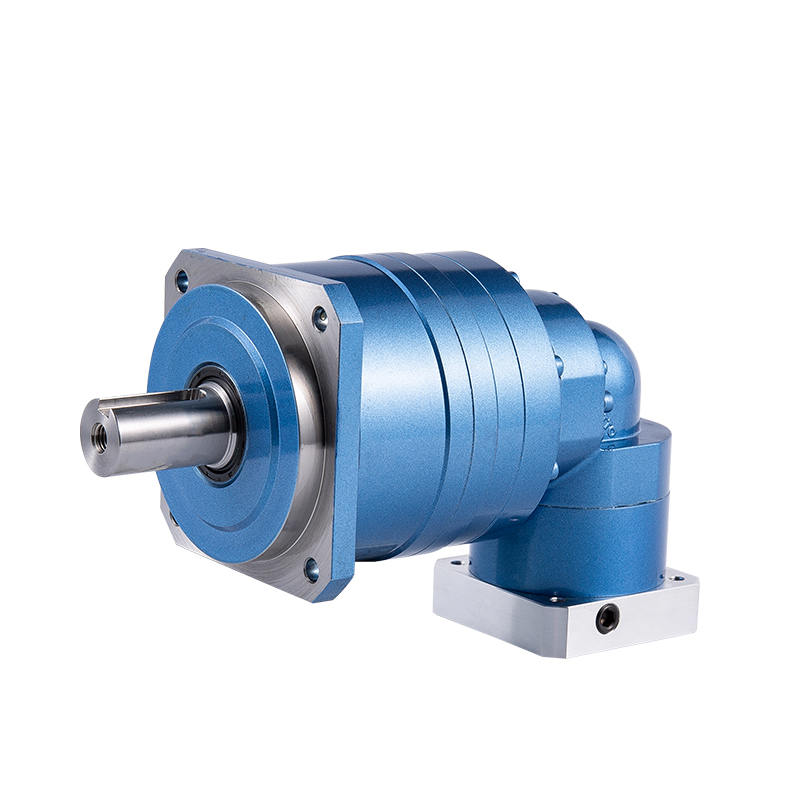
The planetary reducer adopts a helical gear design, which enables smooth and quiet operation and pro...
See Details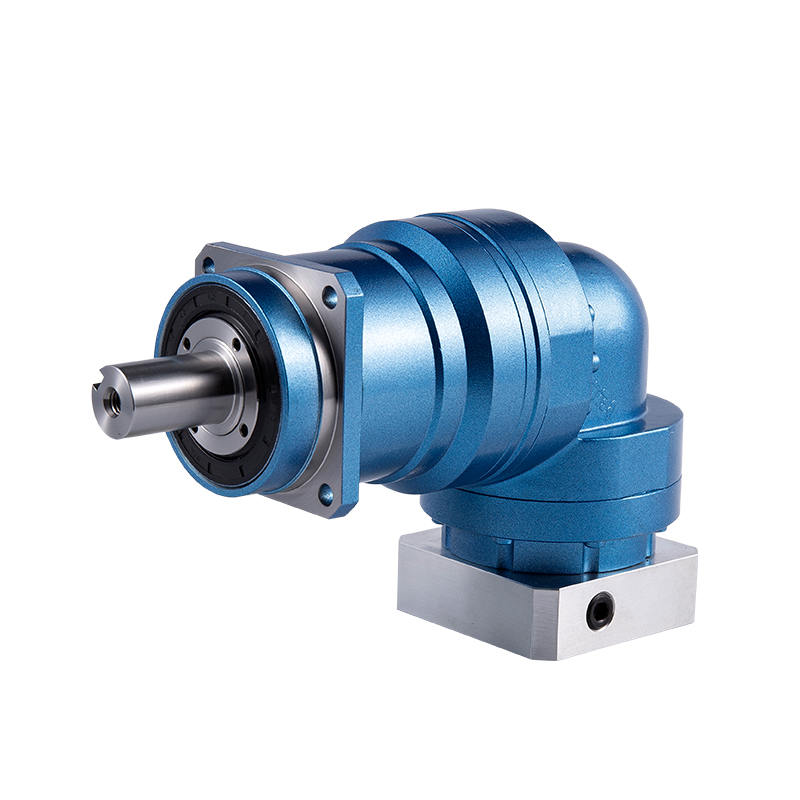
Features of planetary reducer1. Quiet: Use helical gears to achieve smooth and quiet operation;2. Hi...
See Details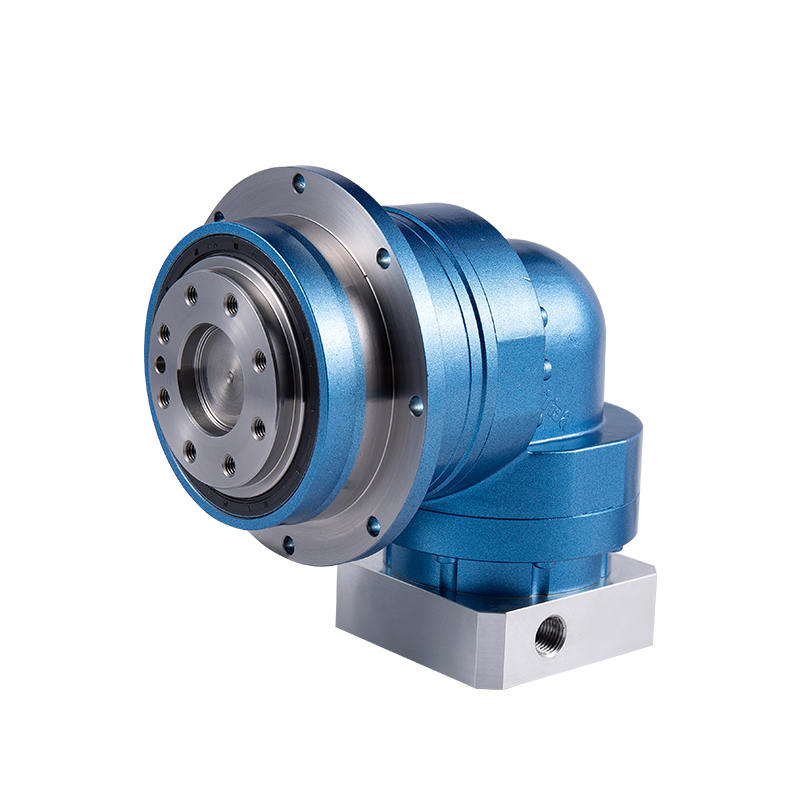
Features of planetary reducer1. High precision: the standard backlash is 4 arc minutes, which is ver...
See Details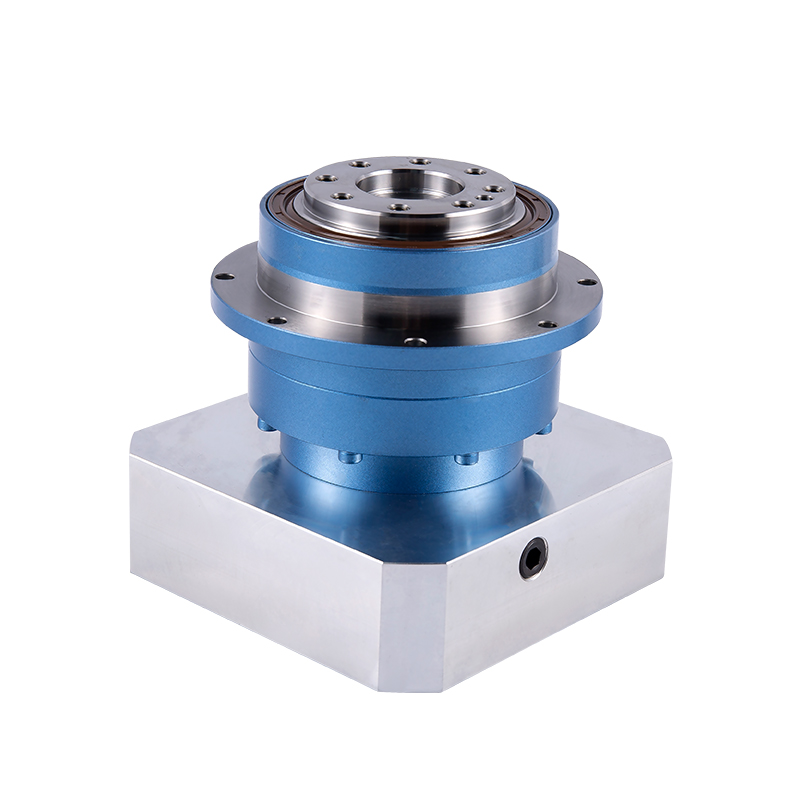
The NHT series planetary reducer adopts an advanced helical gear design, which not only significantl...
See Details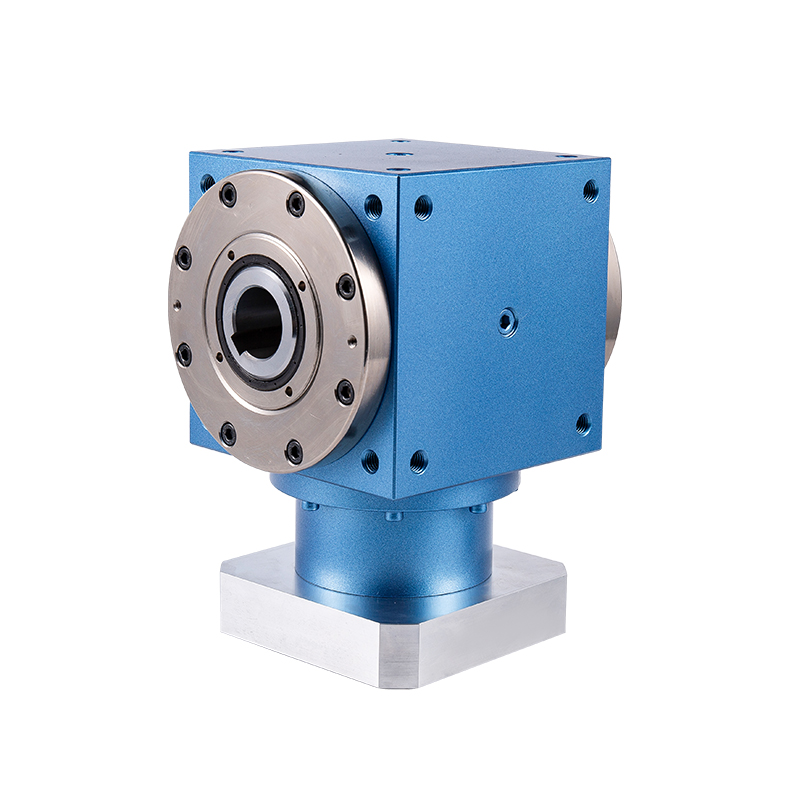
The TD-CR series reducer is centered on the design of hollow shaft output, which not only optimizes ...
See Details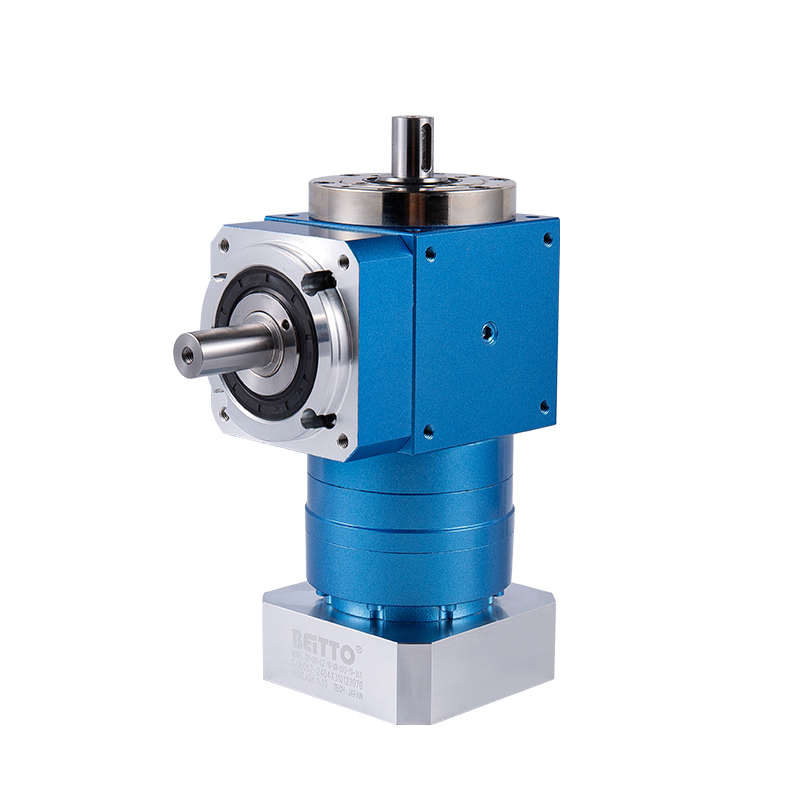
● Various output shaft options● High torque● High efficiency● Long service life● Low backlash● Maint...
See Details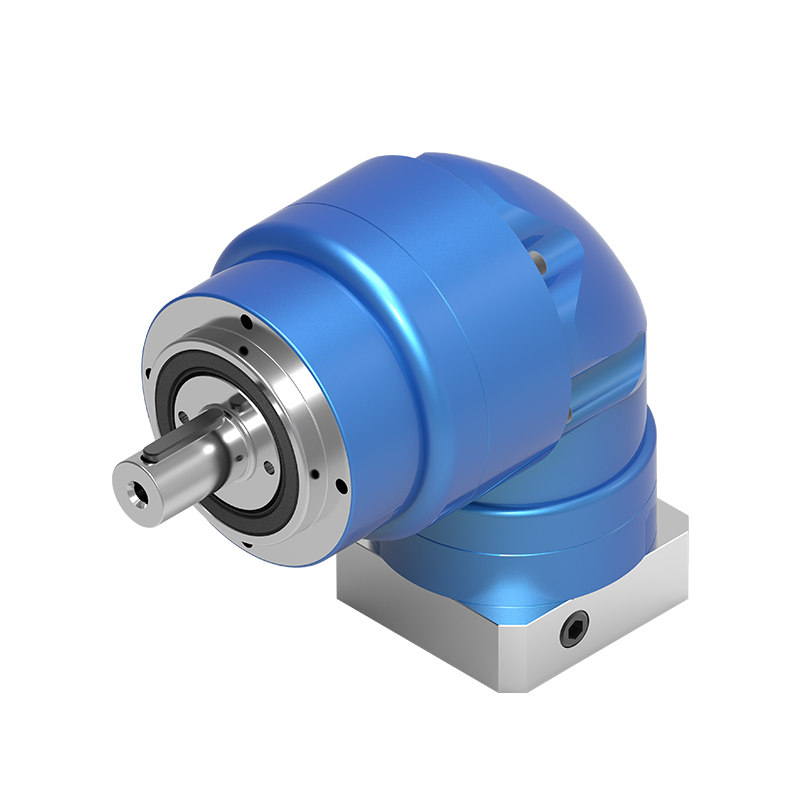
The NLR series planetary reducer adopts a spiral bevel gear design, which allows high-speed input of...
See Details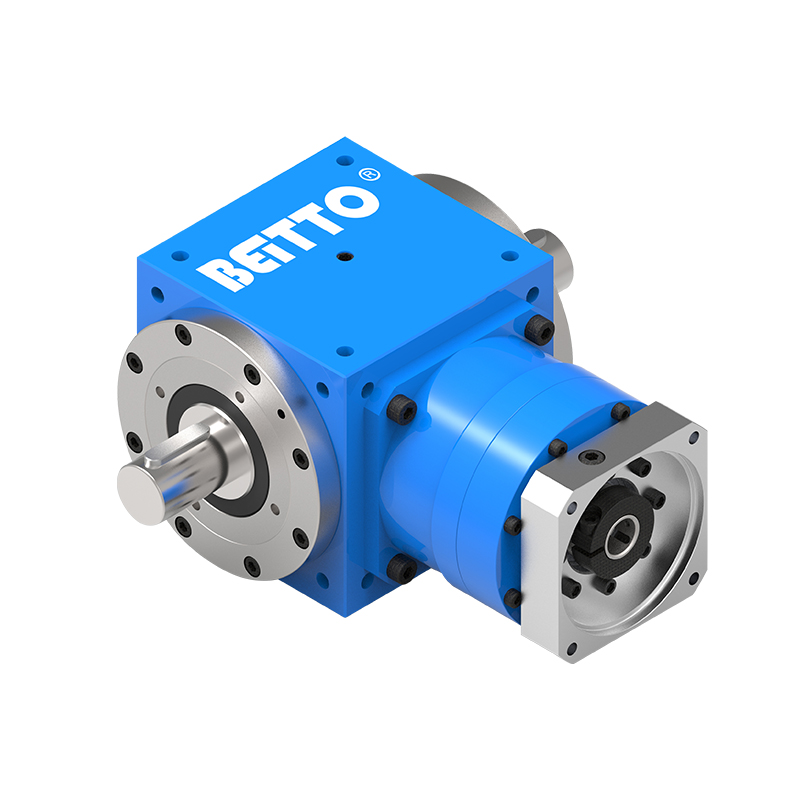
In order to meet the needs of different working conditions, the TD-2P series reducer provides a vari...
See Details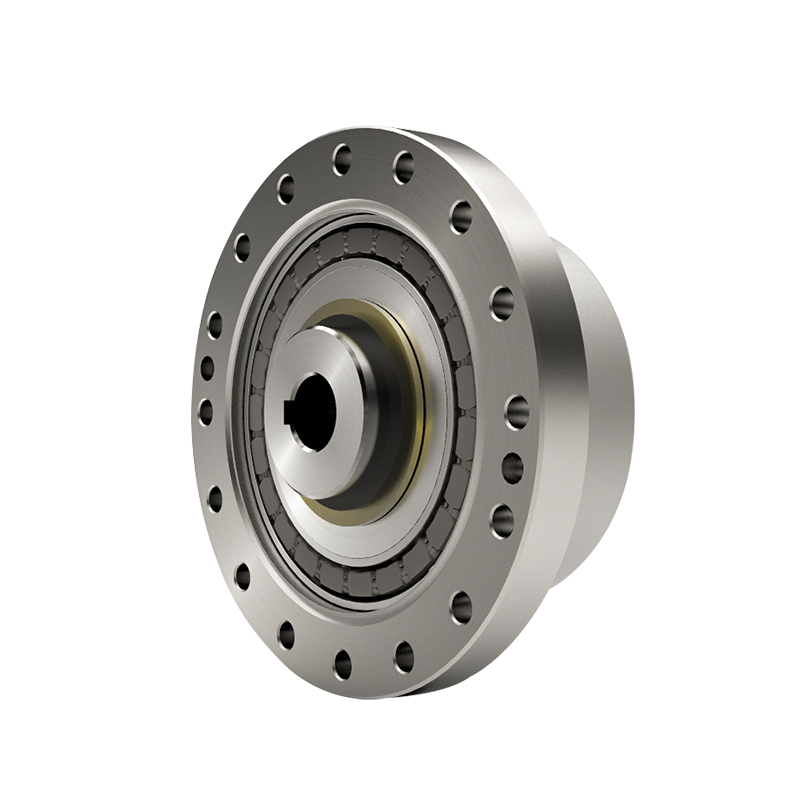
The BCSF series Flexible gear reducer pursues the ultimate lightness and simplicity in design, which...
See Details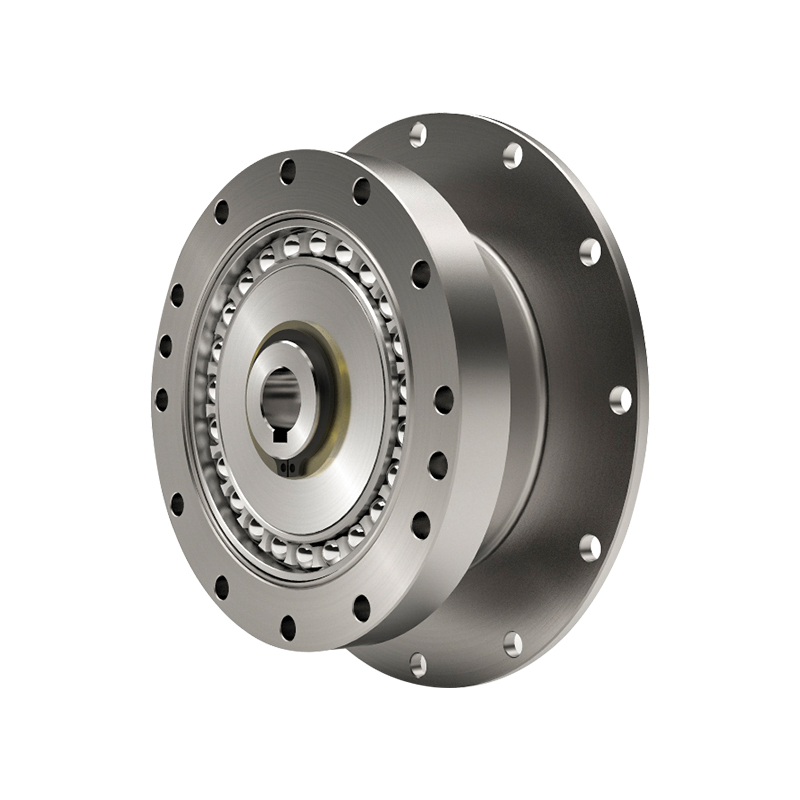
BSHF series Flexible gear reducer adopts a large-diameter hollow shaft design with a compact structu...
See Details

