 EN
EN




 English
 русский
 日本語
日本語 Español
Low Backlash High Precision Torque AHB Planetary Gearbox Reducer
Cat:Planetary Reducer
Features of planetary reducer 1. Quiet: Use helical gears to achieve smooth and quiet operation;2. H...
See DetailsThe seamless integration of motion control components is the cornerstone of modern automation, robotics, and high-precision manufacturing. At the heart of many such sophisticated systems lies a critical pairing: the servo motor and the planetary gearbox. A servo motor planetary gearbox is not merely an accessory; it is a fundamental enabler of precision, torque, and reliability. This specialized gearbox acts as a torque multiplier and speed reducer, taking the high-speed, low-torque output of a servo motor and transforming it into a low-speed, high-torque output that is essential for precise, forceful, and responsive motion. Its role in precision control systems is multifaceted, impacting dynamic response, positional accuracy, system longevity, and overall efficiency. Without it, the full potential of a servo motor's rapid acceleration and deceleration capabilities could not be harnessed effectively for demanding applications.
Content
A primary and critical function of a planetary gearbox in a servo system is to amplify the motor's output torque while simultaneously reducing the reflected inertia to the motor. Servo motors excel at high-speed rotation, but often lack the necessary torque to drive heavy loads directly. The planetary gearbox solves this by providing a mechanical advantage. More importantly, from a control perspective, it manages the load-to-motor inertia ratio. A high inertia mismatch can lead to sluggish response, overshoot, instability, and excessive tuning requirements. By reducing the speed, the gearbox squares the reduction in reflected inertia (inertia is reduced by the square of the gear ratio). This allows for a near-ideal inertia match, enabling the servo drive to control the load with greater agility, precision, and stability. This is why understanding how to select a planetary gearbox for servo motor inertia matching is a cornerstone of high-performance system design.
Successfully integrating a gearbox for optimal inertia matching involves several technical parameters. The goal is to achieve a reflected load inertia that is within the servo drive's recommended range, often between 1:1 and 10:1 of the motor inertia. A planetary gearbox, with its high single-stage reduction ratios and compact design, is exceptionally good at this. Designers must consider not just the gear ratio, but also the inherent inertia of the gearbox itself. High-precision, low-backlash planetary gearboxes are designed with lightweight materials and optimized geometries to minimize their own contribution to the system inertia. The process requires calculating the load inertia, selecting a tentative gear ratio, and then verifying that the total reflected inertia (load inertia divided by the square of the gear ratio, plus the gearbox inertia) falls within the acceptable range for stable servo control.
| Parameter | Impact on Servo Control | Role of Planetary Gearbox |
| Load Inertia (J_load) | High inertia causes slow acceleration/deceleration and control instability. | Reduces reflected inertia by a factor of 1/i². |
| Gear Ratio (i) | Determines the trade-off between output speed and torque. | Higher ratios provide greater torque multiplication and inertia reduction. |
| Gearbox Inertia (J_gearbox) | Adds directly to the reflected inertia seen by the motor. | Low-inertia designs minimize this negative contribution. |
| Backlash | Causes non-linear response, positioning error, and vibration. | High-precision models offer arc-min level backlash for tight control. |
Precision control systems are fundamentally judged by their accuracy and repeatability. A servo motor planetary gearbox is instrumental in achieving these metrics. While servo motors themselves provide excellent feedback and control, any mechanical play or elasticity between the motor and the load will degrade performance. Planetary gearboxes designed for servo applications are characterized by extremely low backlash, high torsional stiffness, and high positional accuracy. Low backlash ensures that there is minimal free movement when the output shaft changes direction, which is critical for applications like CNC machining or robotic assembly where reversing motion is frequent. High torsional stiffness means the gearbox wind-up (angular deflection under load) is minimal, ensuring that the position read by the motor encoder accurately reflects the actual position of the load.
The quest for ultimate positioning precision leads engineers to scrutinize specific gearbox specifications. Backlash is often the first parameter reviewed, with high-end servo planetary gearboxes offering values below 3 arc-min, and even below 1 arc-min for the most demanding tasks. However, torsional stiffness, often measured in Nm/arc-min, is equally important as it determines how much the output shaft will twist under a sudden torque load. Furthermore, transmission error—the deviation between the theoretical and actual output position—must be minimized. This is influenced by gear tooth profile, bearing quality, and assembly precision. For applications involving frequent start-stop cycles or high dynamic loads, such as in packaging machinery or delta robots, selecting a gearbox with optimized parameters for these conditions is non-negotiable. This is precisely why engineers search for the best planetary gearbox for robotic arm applications, where precision and dynamic response are paramount.
Integrating a planetary gearbox significantly enhances the durability and load-handling capability of a servo system. Servo motors are precision devices whose bearings and rotors are not designed to withstand continuous high radial or axial loads from the application. A planetary gearbox acts as a robust mechanical interface, absorbing these forces through its large, rugged output shaft and high-capacity bearings. This protects the delicate servo motor, extending its service life dramatically. Furthermore, the gearbox distributes the load across multiple planet gears (typically 3 or more), which share the transmitted torque. This load-sharing design not only allows for higher torque density in a compact package but also reduces stress on individual gear teeth, leading to smoother operation, less wear, and greater overall reliability. This makes a servo planetary gearbox ideal for high torque servo applications with compact design requirements.
To ensure longevity, it is crucial to understand and adhere to the gearbox's torque ratings. Servo applications often involve dynamic motion profiles with periods of high acceleration. This results in two critical torque values: continuous torque and peak torque. The continuous torque (T_cont) is the maximum torque the gearbox can transmit indefinitely without overheating or exceeding its rated mechanical stress. The peak torque (T_max) is the highest short-duration torque it can withstand, typically during acceleration or deceleration, without suffering immediate damage. A common mistake is sizing a gearbox based solely on the motor's continuous torque, neglecting the higher transient peak torques. This can lead to catastrophic gearbox failure. Proper sizing involves analyzing the entire motion profile, calculating the required output torque at every point, and ensuring both the continuous and peak demands are within the gearbox's specifications with an appropriate safety factor.
| Torque Type | Definition | Sizing Implication |
| Required Continuous Torque | Torque needed to overcome constant friction and process forces. | Must be ≤ Gearbox T_cont rating. |
| Required Peak Torque | Maximum torque during acceleration/deceleration or shock events. | Must be ≤ Gearbox T_max rating. |
| Motor Peak Torque | The absolute maximum torque the servo motor can deliver. | The gearbox must withstand this if the motor can deliver it. |
| Safety Factor | Design margin (e.g., 1.5 or 2) applied to required torque. | Ensures reliability and accounts for uncertainties in load calculation. |
Servo motors are most efficient and deliver their rated continuous torque in a specific mid-to-high speed range, typically above 1000 RPM. However, many industrial applications—such as conveyor drives, rotary actuators, or mixers—require much lower output speeds, often in the range of 10 to 300 RPM. Direct driving these loads with a servo motor would force it to operate at very low speeds, where it is inefficient, prone to overheating, and cannot deliver its full continuous torque. A planetary gearbox elegantly solves this by allowing the servo motor to operate in its efficient, high-speed "sweet spot" while providing the desired low output speed to the load. This not only optimizes motor performance and efficiency but also allows for the use of a smaller, more cost-effective motor to achieve the same output torque and speed at the load. This efficiency question is central to queries like planetary gearbox efficiency for servo systems.
High-performance servo systems can be susceptible to mechanical resonance, where the natural frequency of the mechanical structure aligns with excitation frequencies from the motor or load, causing amplified vibration, noise, and even instability. The integration of a planetary gearbox, particularly a high-stiffness, low-backlash model, can help shift the resonant frequencies of the system higher, often outside the bandwidth of common operating speeds. Furthermore, the inherent damping characteristics of a well-lubricated gear train can help absorb some high-frequency vibrations. For the smoothest possible operation in sensitive applications like medical devices or optical positioning systems, selecting a gearbox with exceptionally high transmission accuracy and low noise generation is key. Engineers often look for solutions that address these subtle performance issues, such as searching for a low backlash planetary gearbox for CNC applications to ensure superior surface finish and part accuracy.
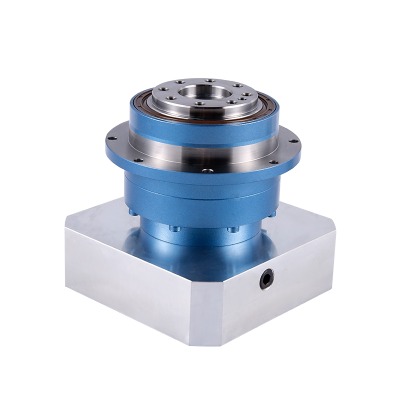
The primary advantages are its exceptional combination of high torque density, compact size, low backlash, high stiffness, and excellent efficiency. The coaxial input/output design saves space, and the load-sharing among multiple planet gears allows it to handle very high torques in a small package. For servo systems where performance, size, and precision are critical, the planetary architecture is often unmatched. Other types, like worm gears, may offer higher ratios but with significant efficiency loss and backlash, while helical inline gearboxes are typically larger for the same torque rating.
Gear ratio selection is a multi-variable optimization problem. Start by identifying the key requirements: 1) Required Output Speed: Divide the motor's rated speed (RPM) by your desired output speed. 2) Required Output Torque: Ensure the motor's continuous torque multiplied by the gear ratio and efficiency exceeds the load's continuous torque requirement. 3) Inertia Matching: Use the formula J_reflected = (J_load / i²) + J_gearbox to find a ratio that brings the reflected inertia within the motor's recommended range (often 1:1 to 10:1). 4) Verify Peak Torque: Confirm the motor's peak torque times the ratio does not exceed the gearbox's peak torque rating. The final ratio is a balance satisfying all these constraints.
While mechanically adaptable via couplings and mounting kits, not every pairing is optimal. Key considerations include: Physical Compatibility: The gearbox input shaft must connect properly to the motor shaft (keyway, spline, or servo clamp). Mounting Interface: Standardized interfaces like IEC flanges simplify integration. Performance Matching: The gearbox's rated speed, torque, and inertia must suit the motor's capabilities. Using an undersized gearbox with a powerful motor will lead to failure. It is always best practice to follow the gearbox manufacturer's recommendations for compatible motor sizes and to perform a full application calculation, especially for high torque servo applications with compact design needs.
Modern, high-quality servo planetary gearboxes are often designed as maintenance-free for their intended service life under normal operating conditions. They are typically lubricated with synthetic grease at the factory. The primary maintenance involves: 1) Periodic Inspection: Checking for unusual noise, vibration, or overheating. 2) Seal Integrity: Ensuring input and output seals are intact to prevent lubricant leakage or contaminant ingress. 3) Re-lubrication: Some models have lubrication ports for re-greasing in very long-life or high-duty-cycle applications, but many are sealed for life. Always consult the specific manufacturer's manual for maintenance intervals and procedures.
Backlash is a detrimental non-linearity in a closed-loop control system. It causes a "dead zone" where a change in motor rotation direction does not immediately result in load movement. This leads directly to: Positioning Error: The system loses its absolute reference during reversals, causing inaccuracies in bidirectional positioning. Reduced Stiffness & Vibration: Under alternating loads, the sudden take-up of backlash can cause jerky motion, chatter, and reduced system stiffness. Control Instability: It can introduce phase lag and non-linearities that make the servo loop difficult to tune optimally, potentially leading to oscillations. This is why a low backlash planetary gearbox for CNC applications is a non-negotiable requirement for achieving high-quality machining results.
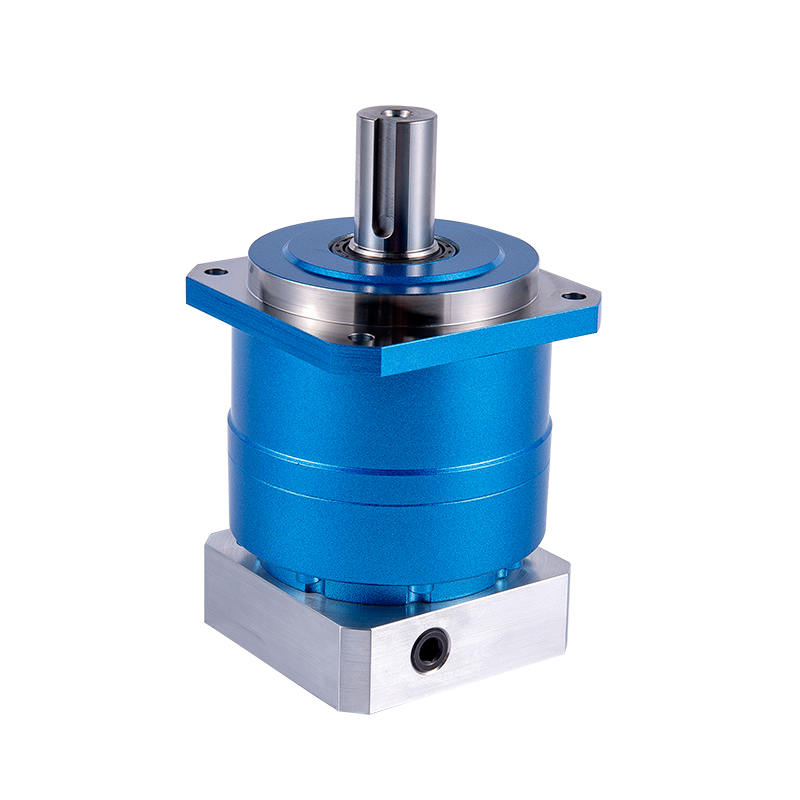
Features of planetary reducer 1. Quiet: Use helical gears to achieve smooth and quiet operation;2. H...
See Details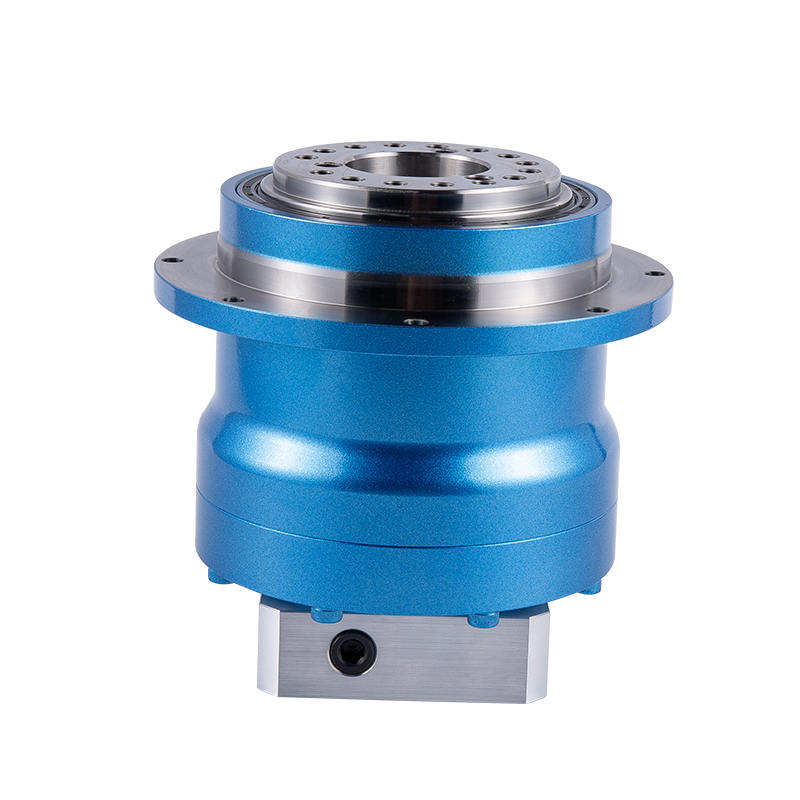
With its high-precision characteristics, the planetary reducer successfully controls the backlash wi...
See Details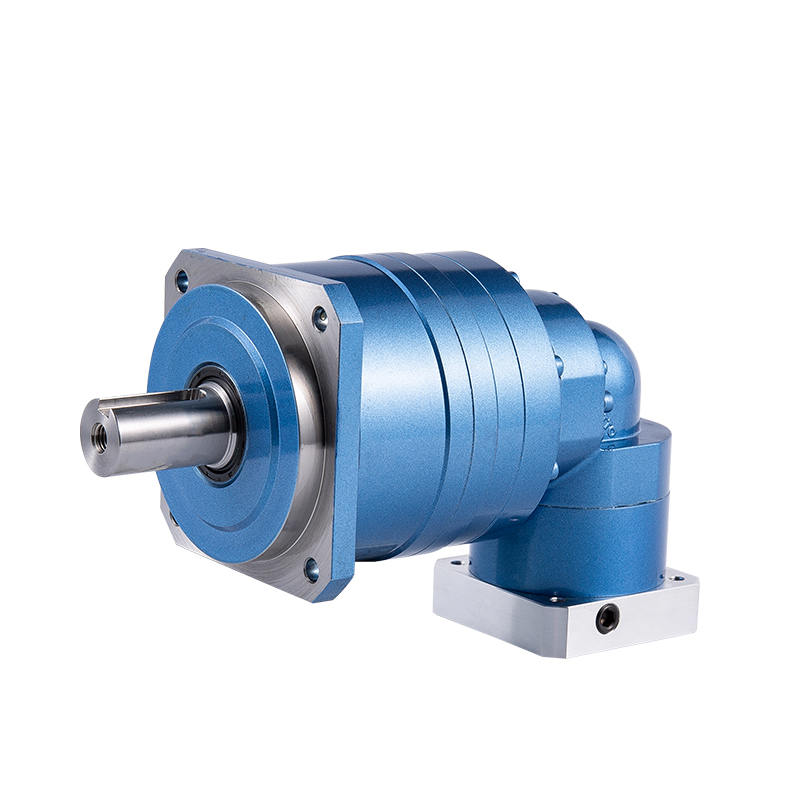
The planetary reducer adopts a helical gear design, which enables smooth and quiet operation and pro...
See Details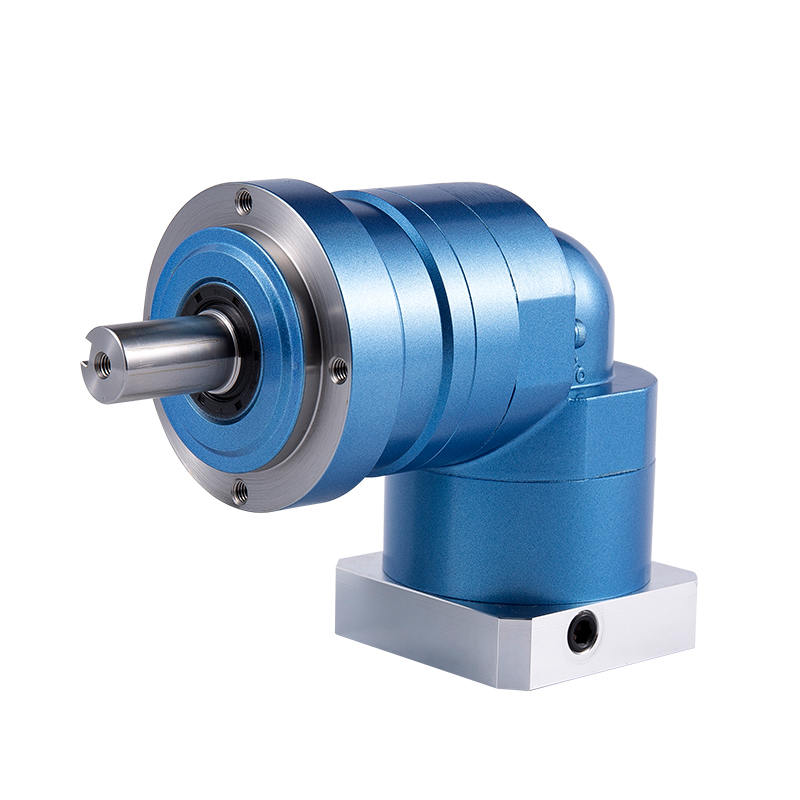
Features of planetary reducer1. Quiet: Use helical gears to achieve smooth and quiet operation;2. Hi...
See Details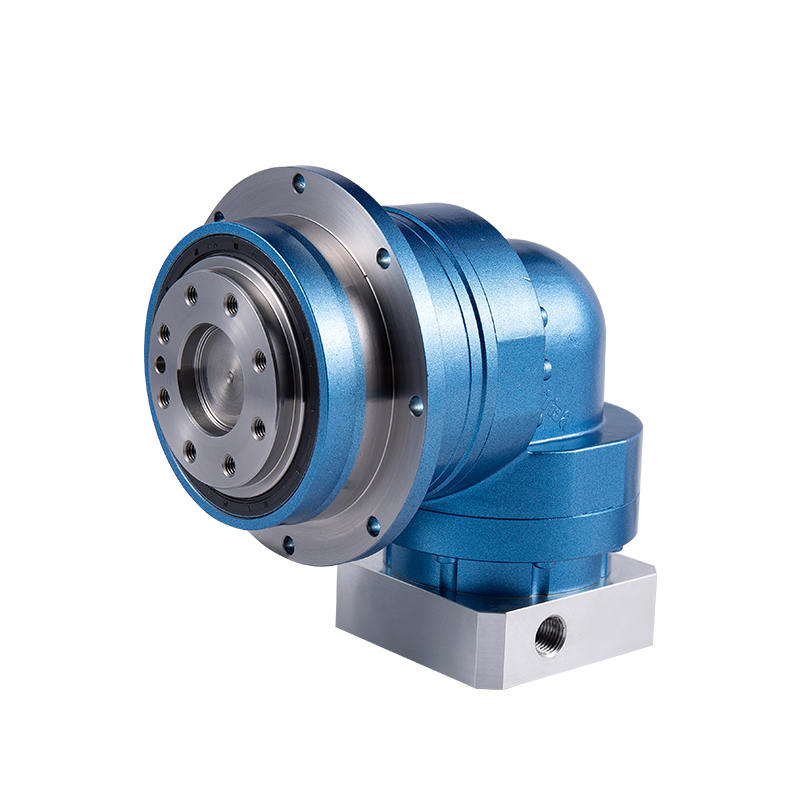
Features of planetary reducer1. High precision: the standard backlash is 4 arc minutes, which is ver...
See Details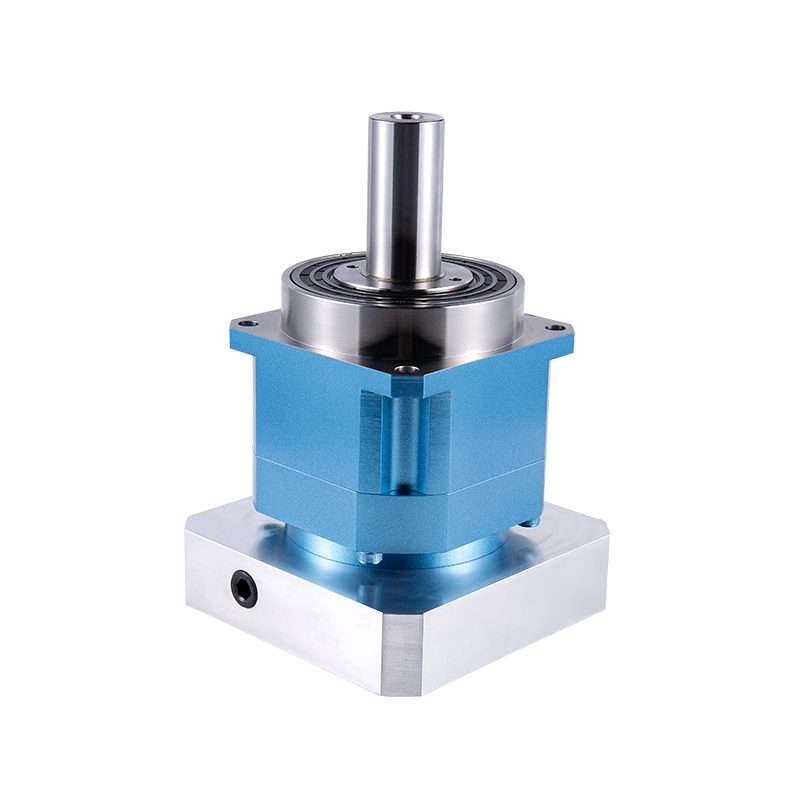
Our reducers incorporate the cutting-edge design concept of helical gears. Compared with traditional...
See Details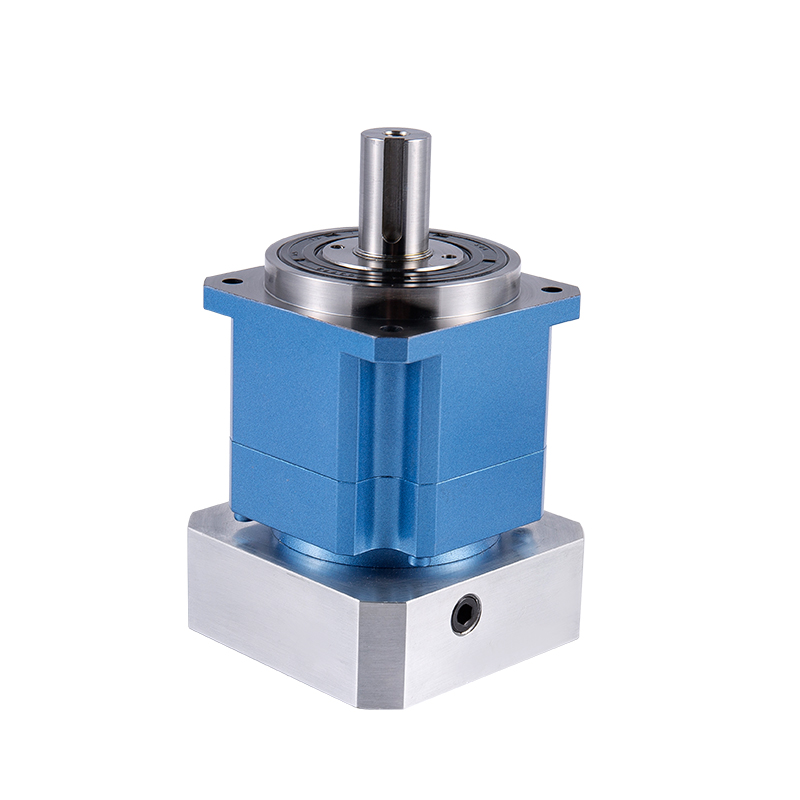
1. NBR series planetary reducer adopts spiral bevel gear design, with high rated output torque, more...
See Details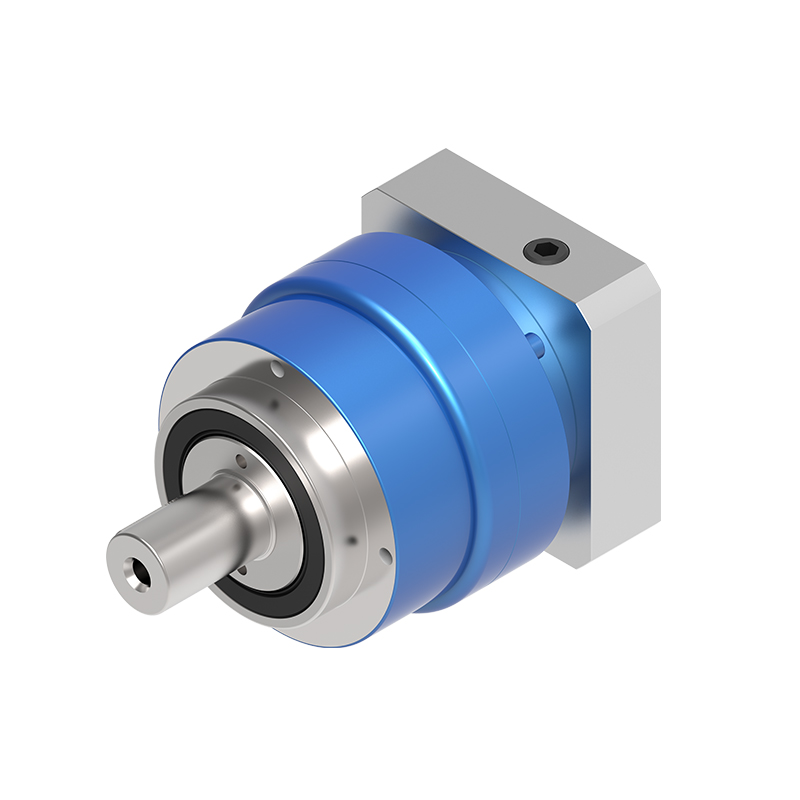
Innovative helical gear structureThe reduction mechanism introduces an innovative helical gear desig...
See Details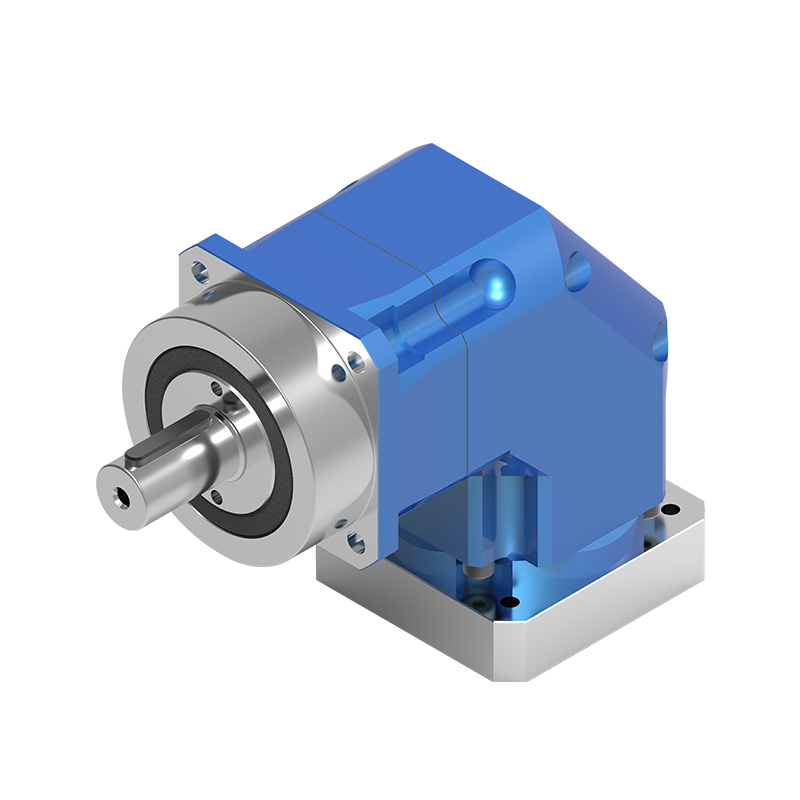
The NSR series planetary reducer adopts a spiral bevel gear design. This innovation not only makes t...
See Details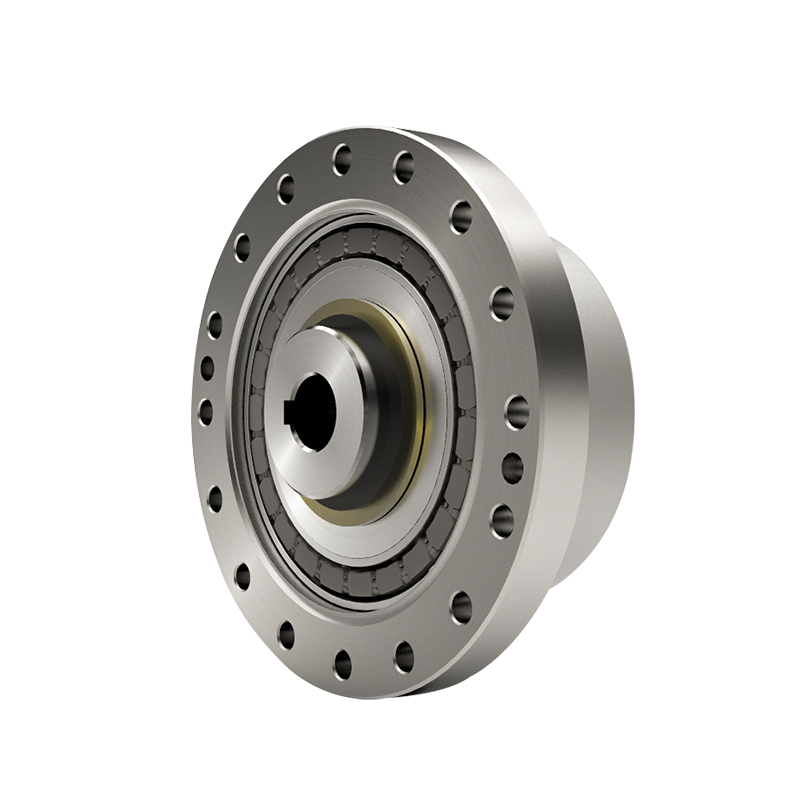
The BCSF series Flexible gear reducer pursues the ultimate lightness and simplicity in design, which...
See Details

